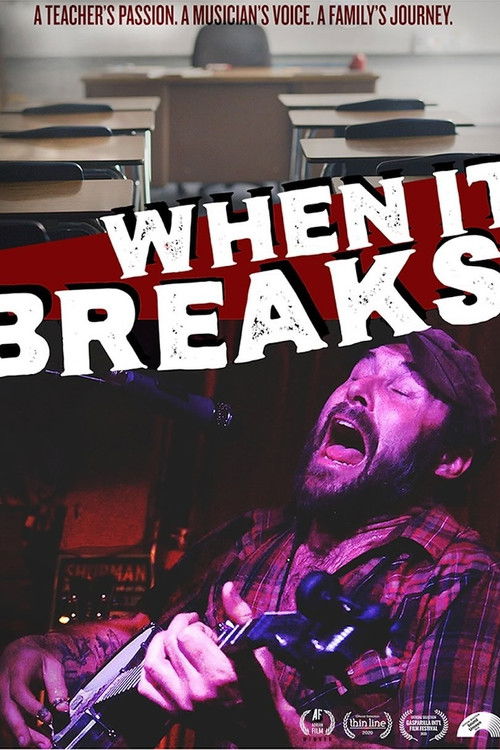
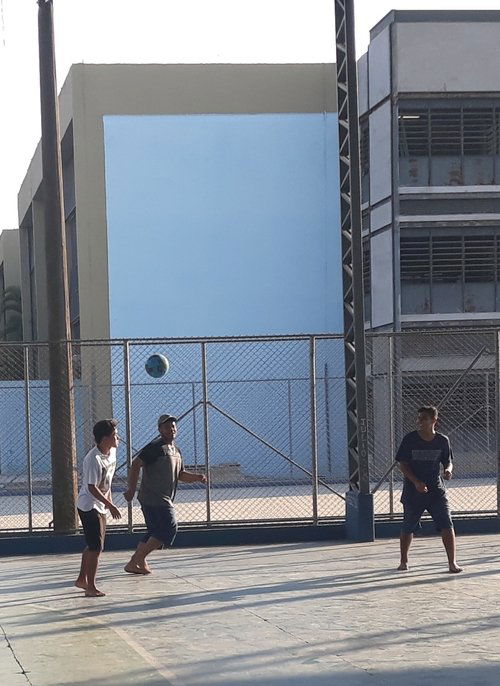
Animari and Zlatko's mission is to help children from disadvantaged backgrounds get the best possible care and education. Will they manage to find funding to welcome more children and to start a high school?
Animari Dimitrova
as Self
Zlatko Zlatkov
As police and DEA agents battle sophisticated cartels, rural, economically-disadvantaged users and dealers–whose addiction to ICE and lack of job opportunities have landed them in an endless cycle of poverty and incarceration–are caught in the middle.
Bubisher, as well as being 'the bird of luck', is a word loaded with literary meaning in Spanish in the Sahrawi refugee camps of Tindouf. Seeing the way in which two cultures interact through small stories and tales can is striking and so is the contrast between the resilience of the young female generations and the realities of life in the desert. This documentary paints a picture of a generation of young female Sahrawis.
“The Walkout” is a new documentary that brings to light a pivotal but often overlooked moment in Texas history: the 1968 student walkout at Edgewood High School in San Antonio’s Westside. Fed up with underfunded classrooms, uncertified teachers, and crumbling facilities, a group of young Mexican American students and their families organized a bold protest that would become a catalyst for statewide education reform. Told through the voices of the original students, community leaders, and historians, The Walkout weaves together personal testimony, historical footage, and present-day reflections to honor the legacy of resistance born in San Antonio’s Westside. This film doesn’t just revisit the past; it also draws a direct line to today’s struggles over school funding and equity in Texas.
An exploration —manipulated and staged— of life in Las Hurdes, in the province of Cáceres, in Extremadura, Spain, as it was in 1932. Insalubrity, misery and lack of opportunities provoke the emigration of young people and the solitude of those who remain in the desolation of one of the poorest and least developed Spanish regions at that time.
Megacities is a documentary about the slums of five different metropolitan cities.
The different life paths of former girlfriends from Catholic and Protestant homes respectively - one a draftswoman, the other a chemical laboratory technician - in two interrelated films, in which love, like the demands and attitudes to life in the change of its foundations in the process of the decline of the GDR and its accession to the Federal Republic of Germany, play a special role.
Morgan Spurlock tours the Middle East to discuss the war on terror with Arabic people.
The world knows the image of the good Canadian. But what if there was a dark secret behind a national identity? THE GOOD CANADIAN exposes the truth behind the idea of a True North strong and free. In this unflinching and eye-opening documentary, directors Leena Minifie and David Paperny move us through the corridors of systemic inequity, from the Indian Act to residential schools, to modern-day family separation. Fusing shocking footage with detailed interviews with experts, advocates, whistleblowers and politicians, THE GOOD CANADIAN challenges national myth-making, while offering Canadians the chance to forge a new identity from the truth.
A chronicle of the first nine years of Pope Francis' pontificate, including trips to 53 countries, focusing on his most important issues - poverty, migration, environment, solidarity, and war - while also giving rare access to the public life of the pontifical.
Preschool to Prison is a compelling examination of how the United States public school system is built and operated like prisons. Zero-tolerance policies are used to justify suspension and arrests that set up a pathway to send children of color and children with special needs from school to prison. Children are being suspended, restrained, dragged, physically manhandled, and subsequently arrested for minor offenses such as throwing candy on a school bus. These personal accounts from people affected by the school-to-prison pipeline give riveting tales about the generational impact on society.
Set in New York City, the epicenter of a phenomenon cropping up in communities across the United States, "Nursery University" reveals the oddly competitive process of nursery school admissions. The film tells the story of five families attempting to place their toddlers in preschool classrooms that have limited space and high price tags.
A slice-of-life look at how kids in the former mining town of Silverton, Colorado stay busy in the summer by “mining” and selling rocks to tourists. Through this time-honored rite of passage, these “rock stars” learn history, social skills, and become little entrepreneurs while delighting tourists from around the world.
The Fall of the I-Hotel brings to life the battle for housing in San Francisco. The brutal eviction of the International Hotel's tenants culminated a decade of spirited resistance to the razing of Manilatown. The Fall of the I-Hotel works on several levels. It not only documents the struggle to save the I-Hotel, but also gives an overview of Filipino American history.
Peter Watkins' global look at the impact of military use of nuclear technology and people's perception of it, as well as a meditation on the inherent bias of the media, and documentaries themselves.
In American Sign Language (ASL) with subtitles available in English, Spanish and Canadian French. This powerful documentary uses real life experiences from Deaf people of varied social, racial, and educational boundaries showing how this form of oppression does lasting and harmful damage. Bonus materials include directors' comments from Ben Bahan and H-Dirksen Bauman and additional scences. Teachers: This film is a wonderful tool for beginning ASL students, as an introduction to a side of Deaf culture that cannot be found in any textbook.
The documentary's title translates as "to be and to have", the two auxiliary verbs in the French language. It is about a primary school in the commune of Saint-Étienne-sur-Usson, Puy-de-Dôme, France, the population of which is just over 200. The school has one small class of mixed ages (from four to twelve years), with a dedicated teacher, Georges Lopez, who shows patience and respect for the children as we follow their story through a single school year.
Through fly-on-the-wall footage and insightful interviews, director ShakaJamal chronicles the effort to create a first-of-its-kind yoga and mindfulness program for Oakland Unified School District middle schools. Aimed at expanding students’ awareness and refining their goals, the initiative has been a unique success, and I Am Hope offers a poignant portrait of the day-to-day struggles of diverse young people united in their desire to pursue big dreams.
When the 2004 tsunami hit the coast of Sri Lanka, 65-year-old Anton Ambrose's wife and daughter were killed. "In five minutes," he says, "I lost everything." A year later, Anton returns to Sri Lanka. With him is his nephew, award-winning filmmaker Rohan Fernando. A Tamil, Anton moved to California in the 1970s and became a very successful gynecologist. His daughter, Orlantha, made the opposite journey, returning to Sri Lanka where she ran a non-profit group that gave underprivileged children free violin lessons. Blood and Water is the story of one man's search for meaning in the face of overwhelming loss, but it is also filled with improbable characters, unintentional comedy and situational ironies.