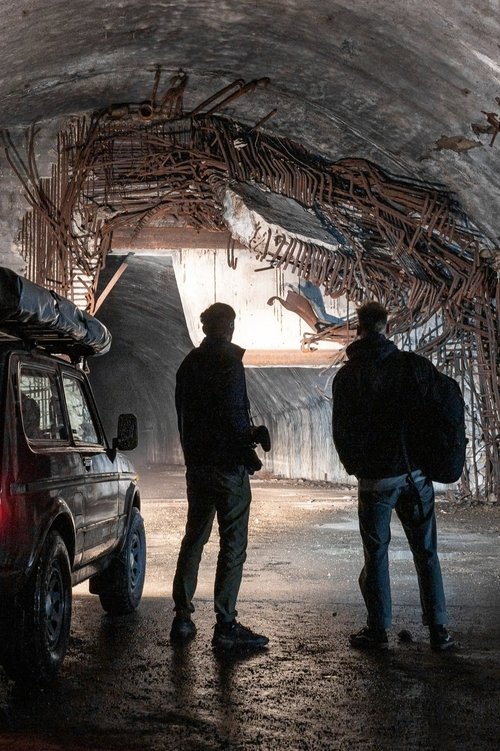
Prohibited, abandoned, and unexplored sites are hidden and sealed in Montreal. Entering defies the law, danger, and death. The urbex community is an even better-kept secret. Enter into this universe at your peril.
Blake Pyne
as Key Cast
Mildojos
Guillaume C.
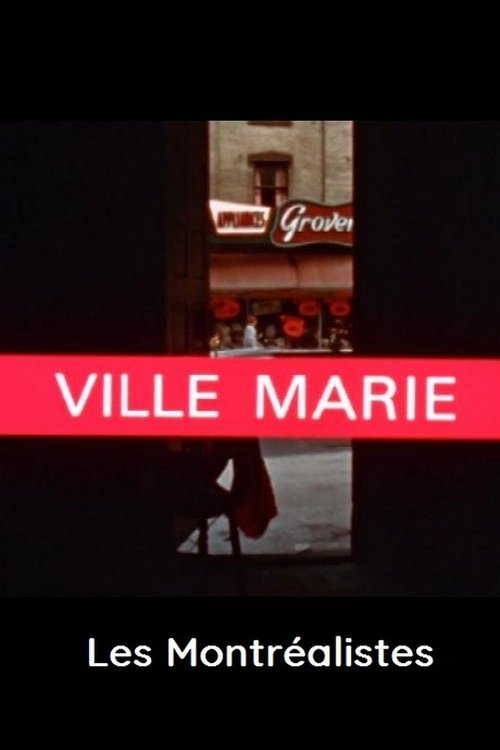
Gilles Groulx's first film shot in 1955 with a camera borrowed from his brother and edited during his spare time when he worked as an editor at the Radio-Canada news service a few years before he joined the NFB. Silent film, presented as its author left it, where the soil and the dialectic of Groulx's work are already there: documentary realism, the social space to be explored, daily life, the relationship between individual and society, social disparities, the consumer society, seduction and happiness.
This documentary focuses on immigrant teens between the ages of 12 and 17 who share the story of their migration and their adaption to life in Canada through theatre. Young but wise, these children describe their experiences with emotion and authenticity.
Student documentary exploring the world of burlesque as a space for artistic expression and personal liberation, where performers channel their creativity and sensuality. Through their voices, they speak about the power of the stage to reconnect with their bodies and establish a deep connection with the audience. Burlesque is presented as a feminist, inclusive, and supportive environment, celebrating gender and body diversity. The action takes place at the Wiggle Room, located in Montreal. It is the only burlesque cabaret in Canada, known for its warm atmosphere and strong sense of community.
Directed by Ariane Louis-Seize, this tribute film was created as a gift for Lorraine Pintal, director of Montreal’s Théâtre du Nouveau Monde. Featuring some of the most memorable characters and performers of Pintal’s career, the film’s succession of surreal scenes from different dramatic worlds introduces viewers to the exceptional woman of theatre, stage director, and friend whom they consider to be the “ghost light” of Quebec theatre.
Show Girls celebrates Montreal's swinging Black jazz scene from the 1920s to the 1960s, when the city was wide open. Three women who danced in the legendary Black clubs of the day - Rockhead's Paradise, The Terminal, Café St. Michel - share their unforgettable memories of life at the centre of one of the world's hottest jazz spots. From the Roaring Twenties, through the Second World War and on into the golden era of clubs in the fifties and sixities, Show Girls chronicles the lives of Bernice, Tina and Olga - mixing their memories with rarely seen footage of the era.
Giovanni, Francesco and Salvatore have passed the age of 80 and are proud to still consider themselves communist or socialist comrades. All three left their impoverished villages in southern Italy during the post-war years and, once settled in Montreal, maintained close links with parties of the Italian left, while militating in progressive Canadian unions and parties.
Young Chinese-Canadian Susan Yee gives a tour of Montreal.
On March 15, 2020, Montreal sees appearing on a wall, written in black letters on white paper "Stop feminicides". It is at this moment that the Collages Feminicides Montreal collective sees the light for the first time. Now the streets of the city are carpeted with their words. Today, after the 17th feminicide, they will continue to fight and stick, until this violence stops.
This short documentary shows the reactions of European immigrants as they land in Halifax at the beginning of the 1960s. From the port, we follow them on a snowy journey by train to Montreal.
There are places in the world that are forgotten by everyone, places where time seems to have stopped, where nature seems to have won the battle. These places are the playgrounds of modern-day adventurers called urbexers. They explore, discover, and photograph the most emblematic abandoned sites in France with a single leitmotif: to prevent them from falling into oblivion forever.
Documentary, poetry and essay rolled into one, this compilation of stockshots and clips sourced from NFB productions of the '50s and '60s offers a singular lesson in Montreal history - its famous figures, symbolic places, and ordinary citizens. Without commentary, the film moves from the red light district to Jean Drapeau, the Jacques-Cartier market, department stores downtown, textile factories, and the construction of Place Ville-Marie. We meet Geneviève Bujold, Oscar Peterson, Monique Mercure, and Igor Stravinsky. We hear Raymond Lévesque, Jean Drapeau, and René Lecavalier.
Made shortly after the referendum on Quebec's independence was held, this documentary illustrates what the politicians' promises were and how the population did not really care nor truly understand what was really at stake, even though just about everyone had an opinion on the subject.
A feature-length documentary portrait of Québécoise painter Johanne Corno, who has lived and worked in New York City for more than 20 years. Ignored by the art intelligentsia in Québec, she settled abroad to escape that creative constraint, and built an enviable international career. Today, she casts a lucid eye on her work and describes the resources she draws on to survive in the jungle of the contemporary art world.
Canadian actress and filmmaker Sarah Polley investigates certain secrets related to her mother, interviewing a group of family members and friends whose reliability varies depending of their implication in the events, which are remembered in different ways; so a trail of questions remains to be answered, because memory is always changing and the discovery of truth often depends on who is telling the tale.
Connecting different generations of players, Warren Cromartie, Andre Dawson, Cliff Floyd and Rondell White join together at a local restaurant to reminisce about life as Montreal Expos and the special bond created with its fan base.
A candid-camera view of professional wrestling as seen in the Montréal Forum, where some of the biggest bouts are staged, and in back-street wrestling parlours where the warriors practice their art.