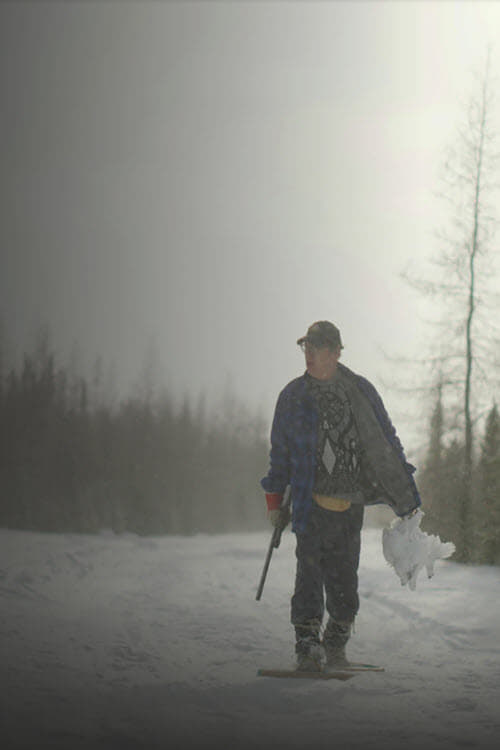
The film follows two young men from the Côte-Nord in Quebec who fall on hard times due to an economic crisis raging in the region. Between staging and song, the movie deals with the importance of work in the construction of identity.
Gilles Vigneault
as
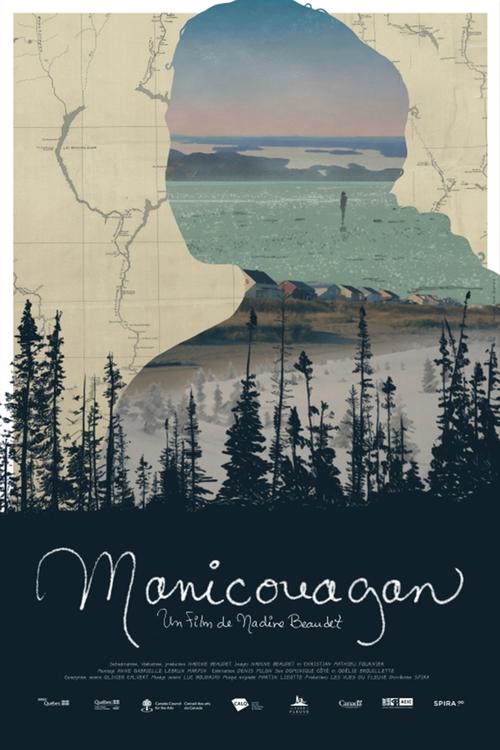
Driven by an intimate quest, this choral film reveals the meeting of individuals who inhabit the territory of Manicouagan and who together contribute to defining its geomorphological and socio-cultural imprints through time in a dreamlike manner.
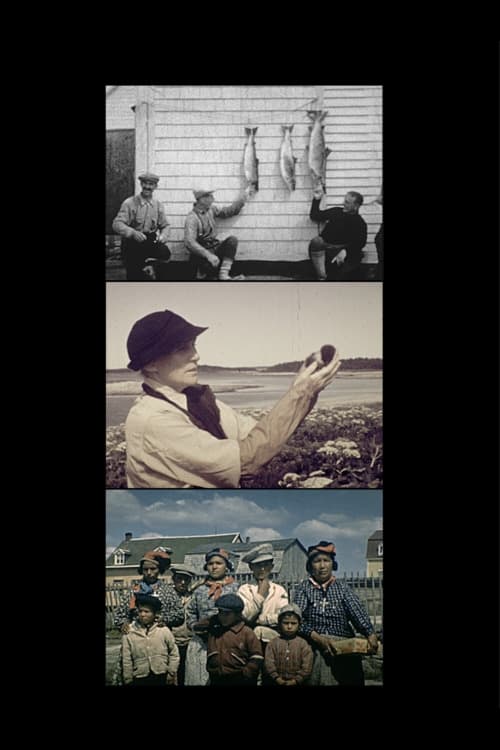
For over thirty summers, Mrs. Fife, an exceptional woman of our time, lived in the village of Baie-Johan-Beetz, where her great gentleness and generosity left their mark on people. This documentary is therefore intended as a tribute: it brings together both numerous testimonies and a collection of archival films and photos, signed by Mary Fife.
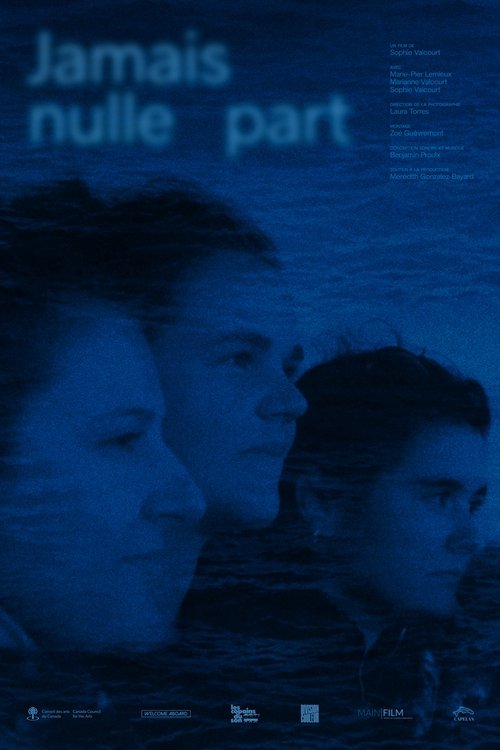
Behind closed doors in a car, three friends from the small town of Sept-Îles discuss their desire to reconnect with the North Shore, the region where they grew up. As the hours lenghten on the road 138, the young women reflect on the quest for identity that accompanies the regional exodus and reveals a social landscape decentralized from the metropolises.
At the age of eight, José shows us his village, Nutashkuan, and everything he loves there.
In 1981, an unusual person arrives in Natashquan, marking the beginning of an unlikely love story between this small Quebec village and the young man they call “The Punk”. Five years later, he vanishes without a trace, forever impacting the community.
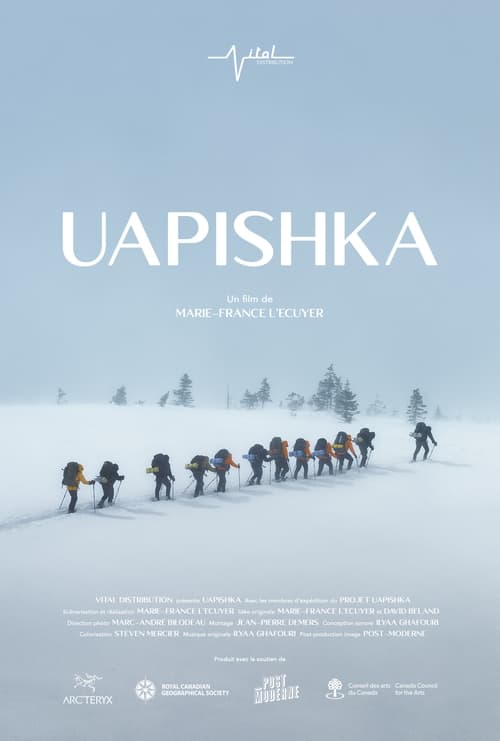
North of the 51st parallel, where the dense boreal forest opens onto an arctic islet, the snow-capped peaks of the Uapishka Mountains watch over the Nitassinan of Pessamit. In the heart of winter, a group of Innu and non-Innu adventurers attempt to cross this vast mountain range on snowshoes, completely independently. Faced with the vastness of the territory, the rigors of the northern climate and the impetuous breath of the tundra, they discover each other in a different way, form friendships and unite to better chart their course. Over the kilometres, the adventure reveals a space for meeting, sharing and reconciliation.
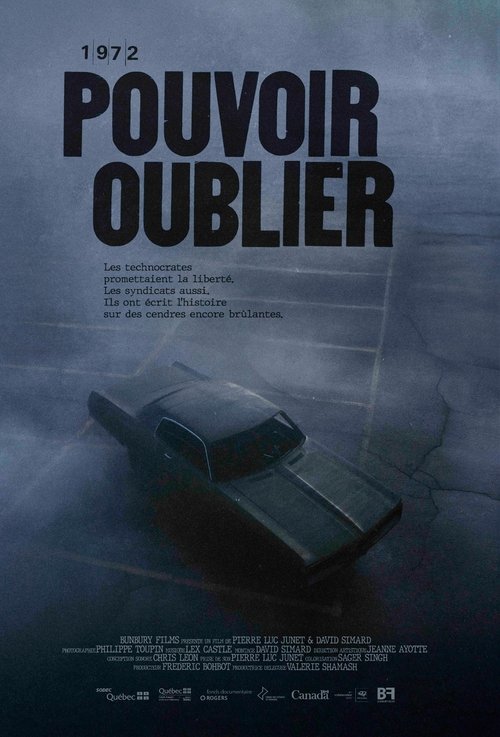
Pouvoir Oublier is a political documentary first constructed from the words of the speakers whose lives changed on the tragic day of May 10, 1972 in Sept-Îles. Their word will be juxtaposed with archival material from the events, some of which are unpublished, which will reflect the collective euphoria in which Sept-Îles and all of Quebec were then bathed.
Documentary filmed at the end of the Manic-Outardes hydroelectric projects on the North Shore of the St. Lawrence (1978) to pay tribute to the men and women who participated, for 20 years, in the first collective project in modern Quebec. Le Temps de la Manic allows us to follow live the moving end of this era in the company of Jean-Noël Laprise nicknamed “the Switch”, Andrée Laprise (Grenier) his partner, their 4 children Carole, Serge, Yvan and Hélène, by Édouard Hovington and Véronique Hovington, by Camille Brisson, Léo Boisclair, Denis Ouellet, Gérard Debigaré and Fernande Buissière. Everyone has experienced the time of the Manic adventure from the inside. The Prime Minister, Mr. René Lévesque, also appears in the film.
Filmmaker Éli Laliberté explores Nitassinan, an Innu territory north of Sept-Îles. His camera follows Clément and Tekuanan. The first is a modern-day coureur des bois, the other returns to Nutshimit, his ancestral family territory.
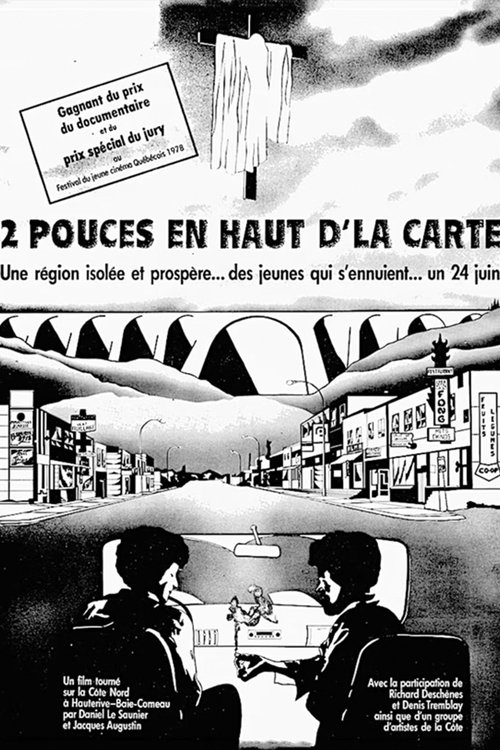
In the 1970s, young people from Baie-Comeau – Hauterive sought to take their place in an industrial society dedicated to work and consumption. Often left to their own devices while waiting to enter the job market, many of them seek their paths in artistic creation. The feast of St. John 74 gives them an opportunity to shout their existence loud and clear and to shake up the existing order. We follow them here in their adventure and their reality.
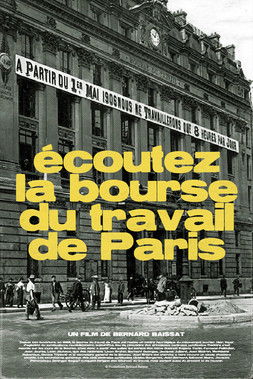
Since its opening in 1882, the Paris Bourse du Travail (Labor Exchange) has remained a nerve center of the labor movement. Once a hotbed of revolutionary syndicalism, and now a meeting place for the main labor federations, history is etched into the walls of the Bourse. It is from the rooms bearing the names of illustrious figures—Eugène Varlin, Fernand Pelloutier, Jean Jaurès, Léon Jouhaux—that historians (Jean Bruhat, Bernard Georges, Jacques Julliard, Jean Maitron, Madeleine Reberioux, Denise Trintant) and the Bourse's general secretary, Jean Braire, have sought to bring to life a century of social history. The general secretaries of the five major labor federations (André Bergeron, Jean Bornard, Edmond Maire, Jacques Pommateau, Georges Seguy) discuss the origins of the Bourses du Travail, but also address the present and the future.
By combining drawings, virtuoso sound and documentary materials, the film follows the work of Drago Trumbetas in Frankfurt. A "foreign worker" himself, Trumbetas created numerous testimonies through his masterful drawings about the painful life of emigrants in Germany.