The documentary follows a group of Latin American environmentalists and scientists on their risky expedition through the second largest coral reef in the world.
Go behind the scenes with the crew of Sea Lions of the Galapagos to showcase not just the production of a film, but the world that inspired it.
Welcome to the world of PLSTC, an undersea dystopia that submerges you in the disturbing reality of plastic pollution in our oceans. Through a series of graphically confronting AI-generated and hand-composited images of ocean creatures, this experimental animated film confronts you with the devastating consequences of our habits on marine life, and leaves you gasping for breath.
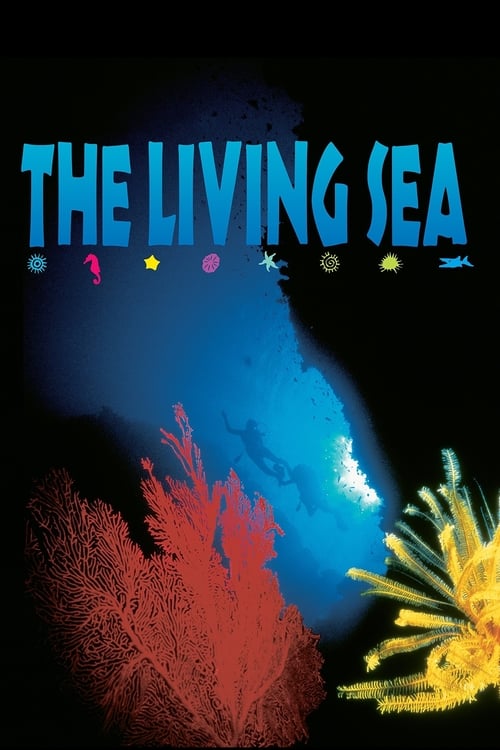
The Living Sea celebrates the beauty and power of the ocean as it explores our relationship with this complex and fragile environment. Using beautiful images of unspoiled healthy waters, The Living Sea offers hope for recovery engendered by productive scientific efforts. Oceanographers studying humpback whales, jellyfish, and deep-sea life show us that the more we understand the ocean and its inhabitants, the more we will know how to protect them. The film also highlights the Central Pacific islands of Palau, one of the most spectacular underwater habitats in the world, to show the beauty and potential of a healthy ocean.
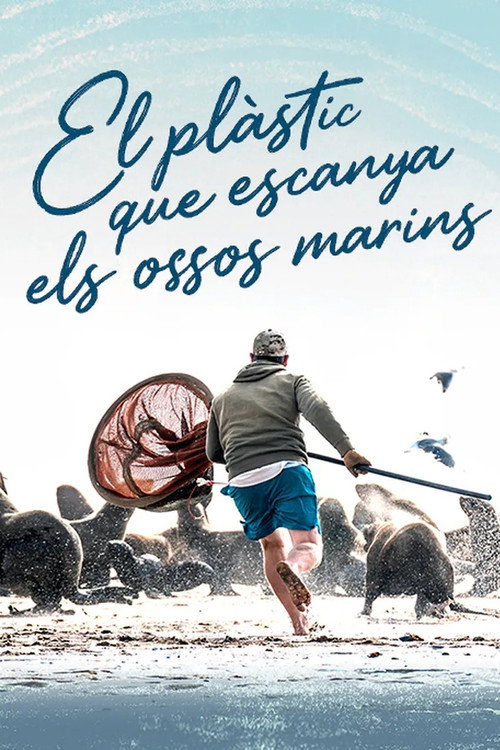
A husband and wife team, Naude and Katja Dreyer, and their three children embark on a mission to rescue seals entangled in deadly plastic pollution along the Namibian coastline. What begins as a few spur-of-the-moment rescues quickly evolves into a unique environmental organization that finds itself pitted against a mounting global crisis.
A mini docuseries following 12 Maldivian households as they embark on a year-long mission to reduce their use of single-use plastics.
Exploring the impact of human behavior on our environment from the perspective of one of South Florida's most beloved and fragile underwater creatures: the sea turtle. A critical look at the effects of global warming, water pollution, and our "throw-away" plastic lifestyle on this keystone species...and inevitably ourselves.
Join George and Matt as they explore the issues faced on the UK coastline and collaborate with Till The Coast Is Clear to raise awareness for plastic pollution.
Ocean Souls Films and Wildlife Media unite 100+ filmmakers, scientists, and leading experts to shine a bright, new spotlight on humanity’s closest living relatives - cetaceans (whales, dolphins, and porpoises). New footage and scientific discoveries reveal the extraordinary world beneath the ocean’s surface, where these majestic beings exhibit characteristics not unlike ours in terms of emotions, language, family, intelligence, and human interaction. Directed by Philip Hamilton, this multi-award-winning film inspires people to care and want to protect the oceans.
Harald Reichenbach sets off around the globe in a sailing boat collecting garbage from the sea with local people. Using a press, he compresses what they find and pours it into resin to form ‚G-Cubes’. He then takes the garbage back as art to the people who created it – consumers in industrialized countries. Nothing on the journey goes exactly as planned, however, and Reichenbach finds himself teetering between art and activism.
This eye-opening documentary follows six couples with unexplained infertility as they lower their exposure to plastics in hopes it helps them conceive.
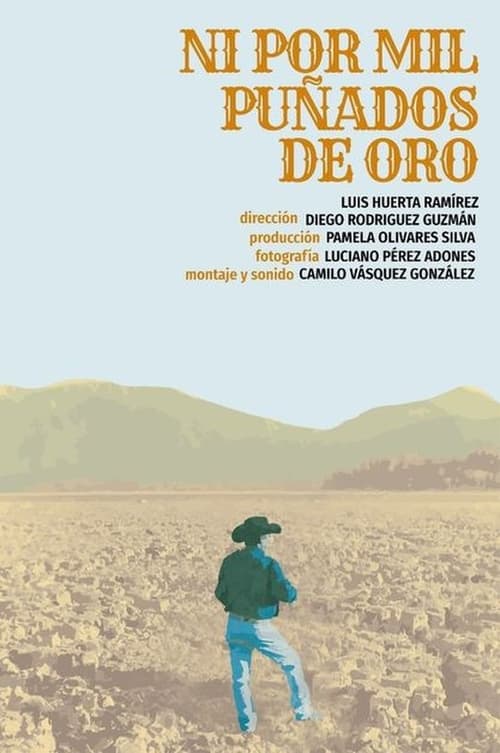
Punta de Choros is a town in northern Chile. This sacred place, its desert environment and its inhabitants are interrupted by Dominga, a mining project that threatens biodiversity and the landscape.
The Schmidt Oceanographic Institute (SOI) is a non-profit oceanographic research foundation that has pioneered deep-sea research and discovery since 2009, aboard its former vessel RV Falkor and also its new RV Falkor. Its remotely operated vehicle (ROV), SuBastian, is equipped with a suite of sensors and a 4K camera that has illuminated the depths and streamed live dives around the world. Most of the images shown are filmed and provided by SOI.
In the deep ocean, life is divided between very different worlds. In the midwater, pelagic wanderers tread migratory routes that span entire oceans, and planktonic drifters and their predators take part in bioluminescent light shows. And below, lies the deep sea floor. A kingdom of mud and ooze, where sessile creatures cling to any solid outcrop and corals craft kingdoms on the seamount crusts. The worlds of the deep sea could not be more different, and yet their stories are fundamentally intertwined.
In the deep ocean, life is divided between very different worlds inhabited by weird and wonderful deep sea creatures. In this film, we delve into the Midnight Zone and the Twilight Zone, where anglerfish, giant sharks, and bioluminescent wonders are found traversing the void.
Sanctuaries in the Dark, a documentary about the deep sea. Sixgill sharks, ghost sharks (chimaeras), big-finned squid (Magnapinna), telescope octopuses, siphonophores (Bathyphysa), drifting jellyfish, and the silent abyss cleaning team: sea cucumbers and giant isopods. Visit hydrothermal vents, where chemosynthetic microbes feed oases of life with giant tubeworms (Riftia pachyptila) and Pompeii worms; glide over coral gardens of seamounts and ancient schools of sponges; watch as wooden and whale waterfalls transform darkness into cities of life; and pause at octopus farms, heated by gentle filtrations. This film features only real footage of deep-sea creatures, filmed by NOAA's incredible ocean exploration institutes and the Schmidt Oceanographic Institute.
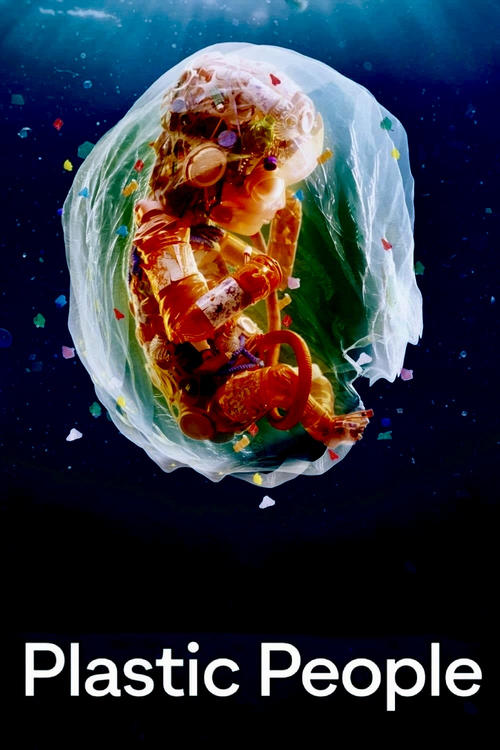
Are we becoming Plastic People? Our ground-breaking feature documentary investigates our addiction to plastic and the growing threat of microplastics on human health. Almost every bit of plastic ever made ends up ground down into "microplastics". These microscopic particles drift in the air, float in the water and sit in the soil. And now, leading scientists are finding them in our bodies: organs, blood, brain tissue and even the placentas of new mothers. What is the impact of these invisible invaders on our health? Ziya Tong, author and science journalist, makes it personal by visiting leading scientists and undergoing experiments in her home, on her food, and on her body.