Two toddlers sit for the camera in their best clothing. One is determined to take toys and objects from the other until the other toddler starts to cry. The BFI notes this is a copy of a film originally made by the Lumière brothers.
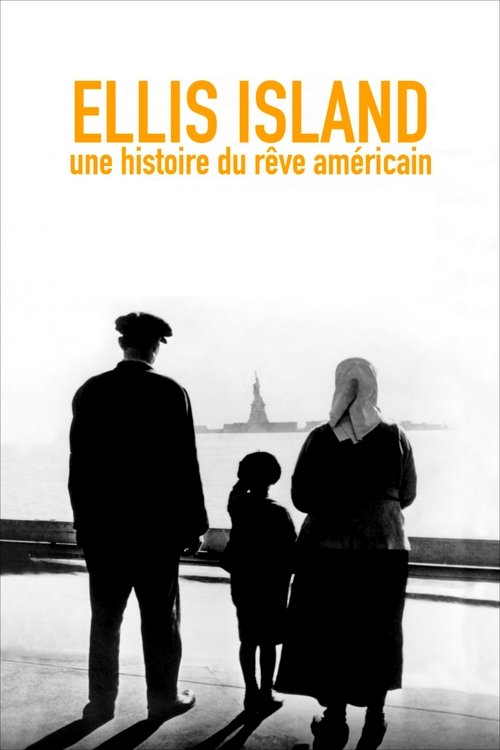
In 1892, Ellis Island, in New York Bay, became the main gateway to the United States for immigrants arriving increasingly from Europe. The story of immigration to the United States from 1892 to 1954, an enthralling polyphonic narrative that embraces both small and great history.
An examination of the intimate life of America's most consequential president, Abraham Lincoln. As told by preeminent Lincoln scholars and never before seen photographs and letters, Lincoln's romantic relationships with men is detailed. The lens is widened into the history of human sexual fluidity and focuses on the profound differences between sexual mores of the 19th century and those we hold today.
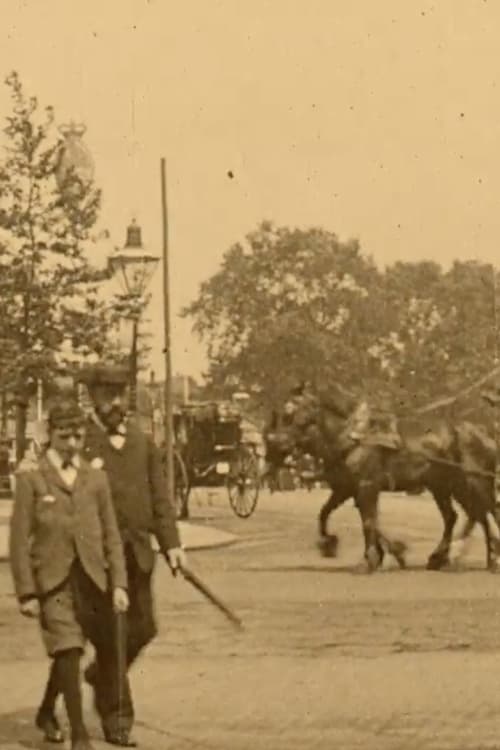
Film made at Hyde Park Corner in 1896 by an unknown filmmaker. It looks south west across Grosvenor Place. The southern wing of St George's Hospital (today the Lanesborough Hotel) can be seen on the right of the picture. The road stretching away in the centre of the picture is Grosvenor Crescent. The busy two way horsedrawn traffic movement is seen on what would today be Grosvenor Place and Apsley Way (the road layout now is different to 1896). The approximate camera position would be today on Apsley Way, just east of the Royal Artillery Memorial. Not to be confused with another Hyde Park Corner film by British Pathé made in the same year but with a different view. (That film looks north towards the triumphal arch at the corner of Hyde Park next to Apsley House.)
An actuality film of traffic and pedestrian movement at the end of a bridge. In the distance on the other side of the bridge, the tops of some large buildings are visible, including a domed building. The location is unconfirmed.
A group of children are encouraged to play in a park by two men. Some play a skipping game. One of the other children refuses and eventually runs away. Another child is fascinated by the camera and stares at it throughout, even when encouraged by one of the men to play. IN the background, traffic passes and pedestrians stroll past behind a railing on an upper level. The children wear sunhats, indicating the weather is very sunny.
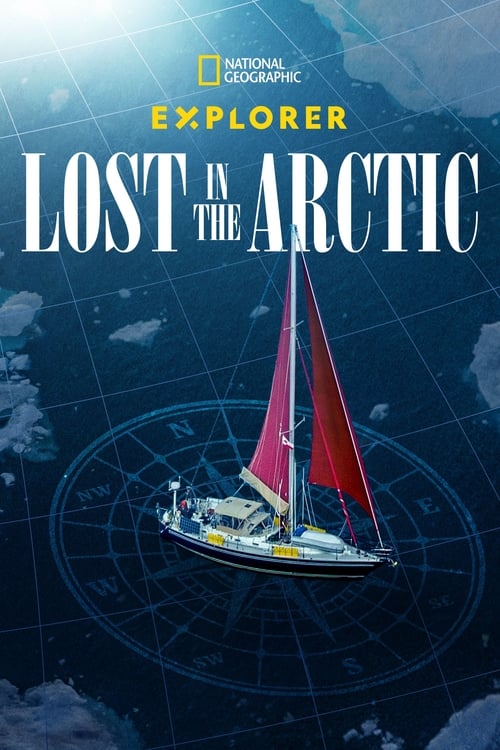
Sir John Franklin set off from England in 1845 with two ships and 129 men to be the first to navigate the Northwest Passage, a new trade route over the top of the world, when Franklin’s ships vanished without a trace. Now, a team of explorers attempts to solve the mystery by retracing Franklin’s route in search of his long-lost tomb.
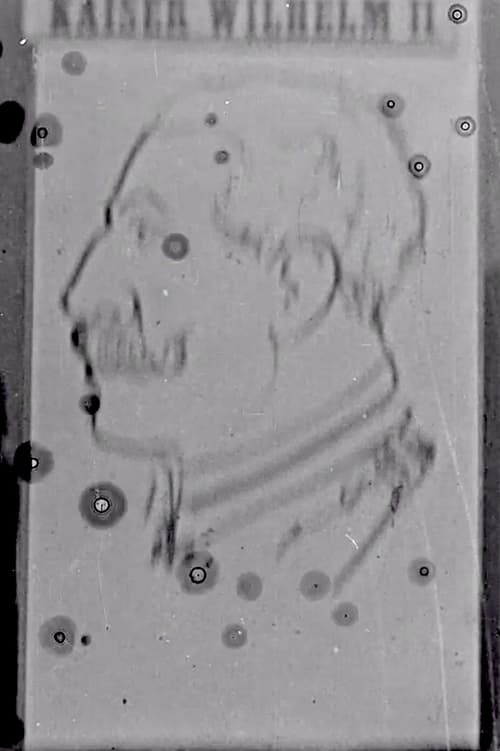
A tiny fragment of an actuality film of Tom Merry (William Mechem), a 'lightning sketch' caricaturist performing his act for the camera and producing a large profile caricature of Kaiser Wilhelm II. The loss of the rest of the film has bequeathed us 6 seconds that are of Mechem standing next to the completed portrait and sadly, that is all there is. An early film made by Birt Acres for R.W. Paul. (see release information for further detail).
An account of the last two centuries of the Anthropocene, the Age of Man. How human beings have progressed so much in such a short time through war and the selfish interests of a few, belligerent politicians and captains of industry, damaging the welfare of the majority of mankind, impoverishing the weakest, greedily devouring the limited resources of the Earth.
A stationary camera, looking diagonally across a racetrack toward the infield, records the horses as they race past. Once they are out of view and the race is over, police officers run onto the infield. The crowd moves around.
Watched by crowds, Sir Redvers Buller, Lady Buller, the Mayor of Southampton and others walk along the gangway leading to the ship towards the camera. Sir Redvers pauses to be introduced to one of the ship's officers before embarking. According to BFI programme notes, the filmmaker William K.L. Dickson can be seen bottom left, attempting to introduce himself to General Buller as he passes. Film companies were in competition to film reportage of the Boer War and Dickson was one of those filmmakers keen to do so.
Spectators on the quayside at Southampton wave farewell as the crowded troopship Roslin Castle moves away to the right of the picture. Large numbers of troops on board wave back to loved ones and the crowd including thr 2nd Battaliion West Yorkshires. Date: 20th October 1899.
An experimental short film about a day in the life of a barefoot boy who sells newspapers in San Salvador.
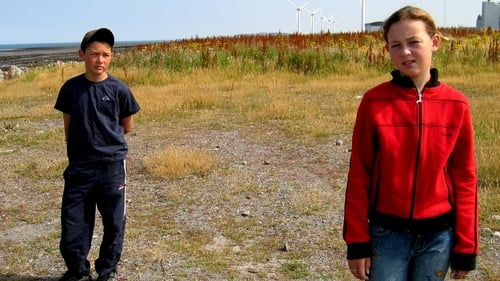
An exposed Cumbrian village by the sea surrounded by windmills, fields and factories provides a striking setting for this fairy tale of young love and the loss of childhood innocence. Over one year, the film follows the 9 year-old Laura Anne and her 11 year-old cousin, Steven as they move towards the end of their childhoods. The narrative is told in rhyme by the young female protagonist. As time passes and the seasons change, feelings and memories from all our childhoods are evoked and we wonder what time will make of Laura Anne and Steven.
Academy Award®-winning filmmaker Errol Morris confronts one of the darkest chapters in recent American history: family separations. Based on NBC News Political and National Correspondent Jacob Soboroff’s book, Separated: Inside an American Tragedy, Morris merges bombshell interviews with government officials and artful narrative vignettes tracing one migrant family’s plight. Together they show that the cruelty at the heart of this policy was its very purpose. Against this backdrop, audiences can begin to absorb the U.S. government’s role in developing and implementing policies that have kept over 1300 children without confirmed reunifications years later, according to the Department of Homeland Security.
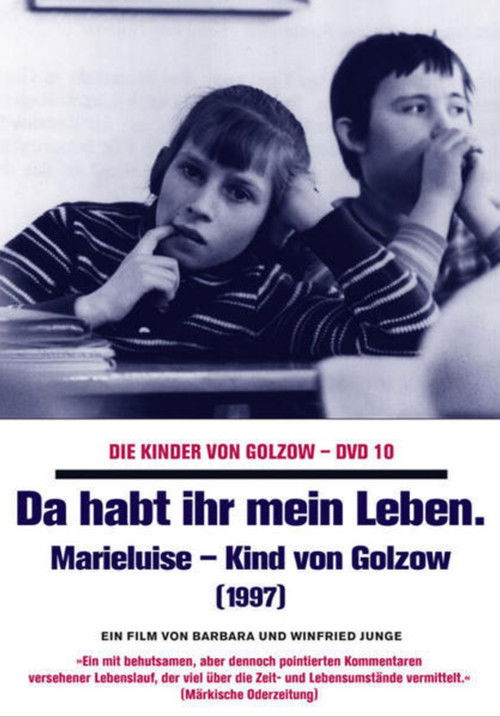
The different life paths of former girlfriends from Catholic and Protestant homes respectively - one a draftswoman, the other a chemical laboratory technician - in two interrelated films, in which love, like the demands and attitudes to life in the change of its foundations in the process of the decline of the GDR and its accession to the Federal Republic of Germany, play a special role.
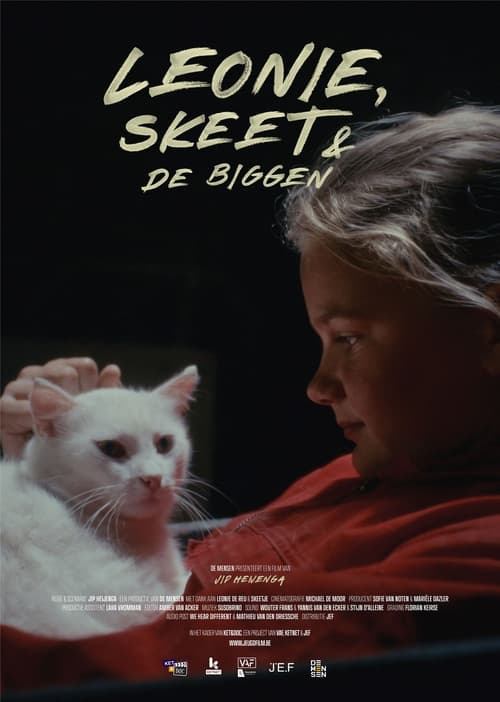
Leonie’s dream is to become a pig farmer, just like her parents. She wanders happily around the farm, helping out in any way possible. She tends to the pigs, and is present from the fertilisation of the sows to the moment the truck leaves for the slaughterhouse. The family farm teaches her about the circle of life. However, new laws on nitrogen emissions have undermined the economic viability of the farm, and bankruptcy looms. Together with her cat Skeet, Leonie watches the last pigs disappear from the farm, and she realises that her dream of becoming a pig farmer might not come true.
Reclaiming what was once stolen from him, a man journeys back to the place of his childhood nearly 80 years after his world came crashing down.
The documentary sheds light on the lives of children who suffered physical and psychological trauma due to the terrorist attacks by Armenia on the eve of the Second Karabakh War.