Xavier Arjona
as Xavier Arjona
Esther López
as Esther López
Irene Garrido
as Irenegarry
Iria Rodríguez
as Iria Rodríguez
Mario Tornero
as Mario Tornero
Desirée Martínez
as Desirée Martínez
Carolina Espada
as Carolina Espada
In this video essay, the filmmaker reflects on the contrast between himself and the space around him, a student dormitory.
Two generations dialogue through the images they filmed of their children, a reflection of the emotional bond that arises from their involvement with what was shot.
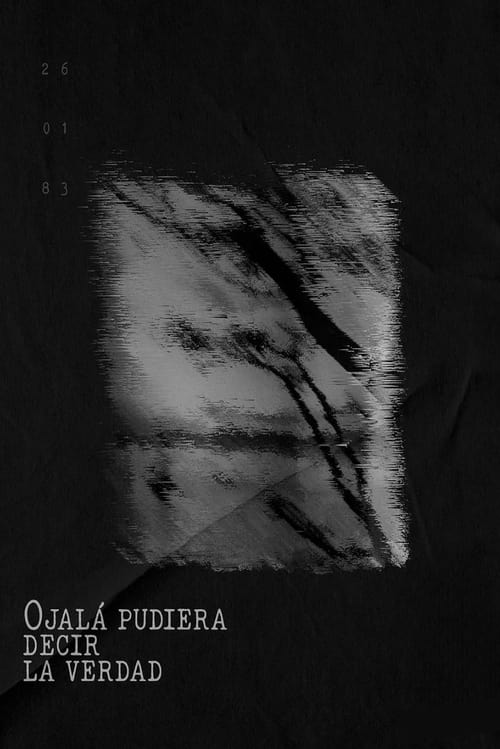
After collecting multiple records related to a painful family tragedy, Victor dives into the archive in search of answers about what really happened on January 26, 1983
Using footage filmed in Peru in 1950 by a foreigner, Víctor writes a letter to his son to question the country he will inherit: among heartbeats and ruins, he searches for a hope that still endures amid disillusionment.
Film made with two photographs taken at the Unité d’Habitation, built by Le Corbusier in Marseille. For the editing the film are used a film adaptation of the rules of the Modulor, measurement system designed by Le Corbusier himself. Includes a tribute to Paul Sharits and another to Agnès Varda.
Marcos was once a successful author of children's books. For years, his goal has been to finish his first "adult" and "serious" novel. But his lack of social interaction, his excessive ambitions, and the influence of the drugs he grows and sells for a living don't help him. He is about to give up when his friend Walter suggests another path: Marcos just has to live a more intense life. And write about it, like so many great writers...
Héctor Vicario is an unhappy accountant who hasn't been able to make it in life, while his twin brother, Thiago, is the complete opposite: a highly successful musician. After their father's death, the two must reunite to plan the funeral and face what life has in store for them after a long period of separation.
Growth is beautiful, and often progress, too, but if it's not measured, growth can be predatory. Made using the principles of essay film, and using an anonymous character, this film chronicles and critiques how provincial cities grow, change, and gradually lose their identity.
A young man tries to charm a figure similar to himself.
Can an adolescent experience define our perception of love? Can or should everything be connected or have a reason? A character recounts to his niece or nephew, in the form of a confession, an event from his adolescence that defines his particular way of perceiving love. While this exercise serves to tell a story that, regardless of genre, has surely been experienced by more than one person, it expresses the director's idea that discourse can sustain a work on its own, even if what is depicted on screen appears to have no connection.
Tiny meerkats survive in the harsh desert elements and follow the matriarch that is pressured to produce heirs and ensure the family's survival for generations to come.
This documentary traces the history of the B-Western from it's silent movie origins to its demise in the early 1950s. The film contains a large number of scenes from early silents and seldom seen films, as well as old photographs of the stars and one-sheet advertisements for lost films.
The extraordinary rise of Olympic boxing champion, record-breaker, feminist and LGBT icon Nicola Adams. From the streets of Leeds to the world stage, Adams fought her way to the top and changed the game. This, is her story.