In Caazapá, the “city of magic and legends”, two Paraguayan students are searching for happiness, gold and a magic bird. Their European dropout neighbours are hoping for freedom, healing and salvation from Armageddon. Everything has its price.
Santino, a circus kid constantly on the move, listens to his great-grandfather's stories as his own life is just beginning.
Twenty-five years after his abduction during the Kosovo War, painter Skender Muja recalls a pivotal moment of survival. Held in a detention center, he was ordered to draw a Serbian commander’s portrait to save his life.
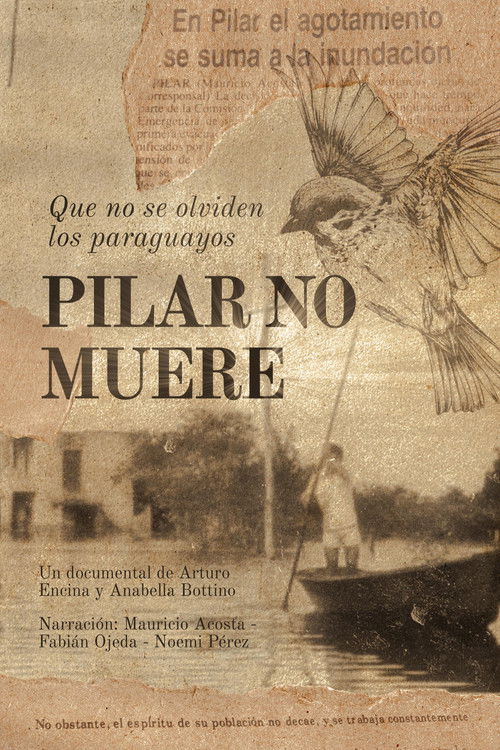
In 1983, the inhabitants of the city of Pilar struggle against nature in an attempt to survive an imminent rise of the river, and amid the desperation, hope emerges.
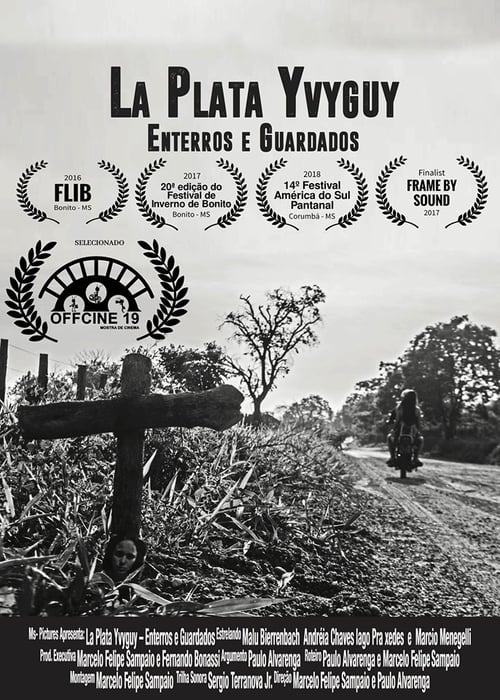
The Legend of the Paraguay War Legend tells that during the Paraguay War (1864-1870), families that lived near the border and soldiers who were leaving for battle used to hide their valuable belongings by burying them in secret spots, in order to safely recover them after the war. In several cases, though, the only people who knew about the secret spots of those personal treasures died before they could go back to recover them. According to inhabitants of that region, the spirits of those tormented men would reveal the location of those "buried and hidden" treasures to chosen people in their dreams, visions or by haunting them. "The Legend of the Paraguay War" approaches local legends in a historic and literary way. Those legends were born from within the biggest conflict in South America, and were developed and influenced by the local imaginary view of the world and which can be considered a relevant part of those people's identity up to this day
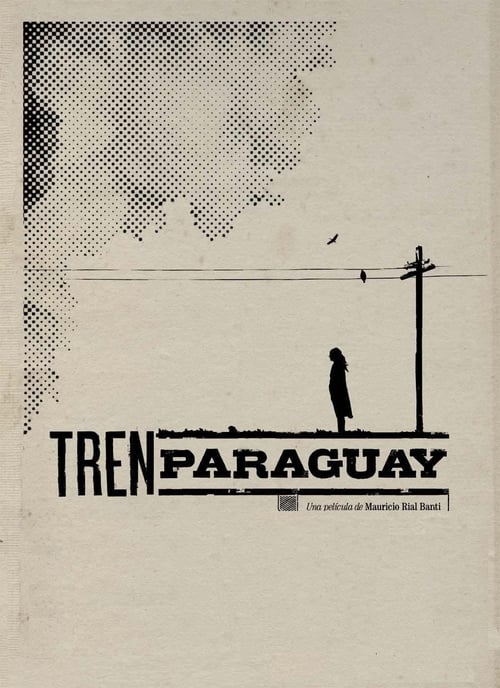
The Paraguayan railroad, created in 1861, fell in the late twentieth century in decline. Operated for decades by foreign companies and later by the Paraguayan State has been in a growing abandonment since the late 90s. Since then there have been projects of recovery, but the stations are empty and the main terminal was demolished late last year.
Grandma has become a little doddery. And since the death of her husband, called E.O., ever bigger gaps have opened in her memory, and her disorientation has increased. Director Astrid Menzel makes a decision: to take a ten-day canoe trip on northern German waters with her brother and the 86-year-old lady. An adventure whose outcome is uncertain and which the three travellers have to face anew at every stage.
Images of Argentinian companies and factories in the first light of day, seen from the inside of a car, while the director reads out documents in voiceover that reveals the collusion of the same concerns in the military dictatorship’s terror.
The documentary deals with the experiences around orgasm of Paraguayan women of different ages and provides the vision of a sexologist who comments on these experiences. In the conversation that is generated from this social dynamic, taboos, myths and common situations in relationships are discussed.
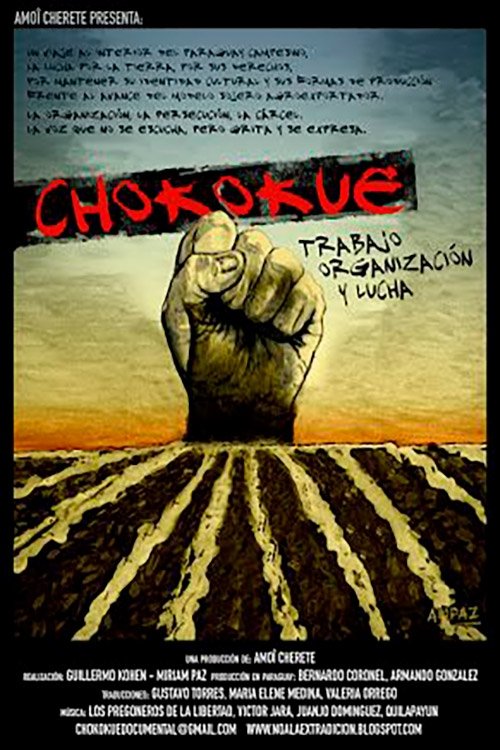
A journey into rural Paraguay, the struggle for land, for rights, to maintain cultural identity and traditional production methods in the face of the advance of the soybean agro-export model. Organization, persecution, imprisonment. The voice that is not heard, but cries out and expresses itself.
Eami means ‘forest’ in Ayoreo. It also means ‘world’. The story happens in the Paraguayan Chaco, the territory with the highest deforestation rate in the world. 25,000 hectares of forest are being deforested a month in this territory which would mean an average of 841 hectares a day or 35 hectares per hour. The forest barely lives and this only due to a reserve that the Totobiegosode people achieved in a legal manner. They call Chaidi this place which means ancestral land or the place where we always lived and it is part of the "Ayoreo Totobiegosode Natural and Cultural Heritage". Before this, they had to live through the traumatic situation of leaving the territory behind and surviving a war. It is the story of the Ayoreo Totobiegosode people, told from the point of view of Asoja, a bird-god with the ability to bring an omniscient- temporal gaze, who becomes the narrator of this story developed in a crossing between documentary and fiction.
In 1996, one of the biggest media scandals in German history shook the public: Michael Born, a self-made journalist, had faked over twenty reports for the newly established private television station between 1990 and 1996. Some seemed amateurish, others dealt with absurd topics: child labor for IKEA in India, drug addicts licking toads to get high, and the Ku Klux Klan in the Eifel region were just some of his numerous fabrications. How did it come to this? Was Michael Born an enlightened figure who subversively exposed the tabloid system, a victim of the system, or simply a bumbling fraud? Film traces Michael Born's footsteps. Put together from hundreds of hours of raw material and the memories of former companions, an incredible story of forgery emerges. A media-theoretical film about levels of reality, fake news, and the question: Why do we actually believe what we see?
The campaign ¡Yanquis Tapeho! (in Guarani, "Yankees go away," echoing the classic phrase "Yankees go home!") is a campaign of repudiation against the presence of US military troops in Paraguay and Latin America, launched by the Anti-Imperialist Platform Paraguay. This material is the first short video of this campaign. It includes information about the presence of troops in Paraguay, as well as images of the actions carried out by students, organized youth, and other popular sectors during the direct action of repudiation in front of the National Parliament (September 15, 2005) and the massive march through the center of the capital demanding the immediate withdrawal of US military personnel from Paraguay and Latin America (September 17, 2005).
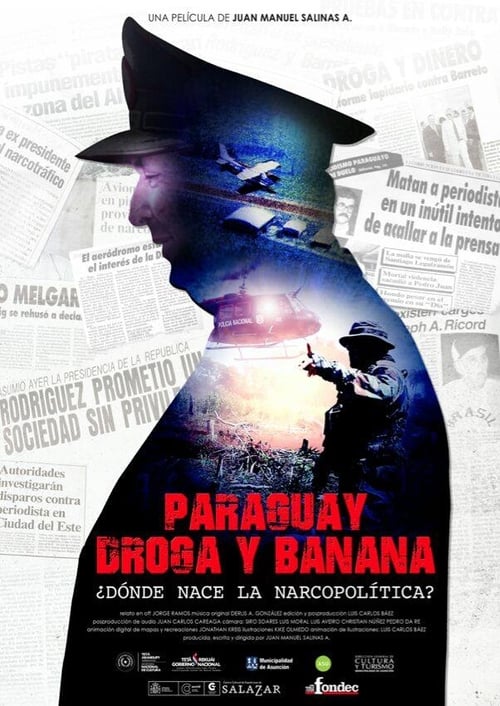
Documentary that explores the relationship between politics and drug trafficking in Paraguay
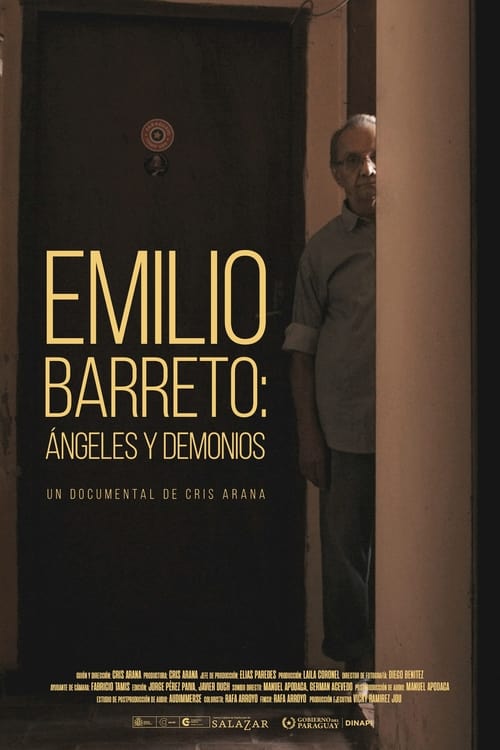
In Paraguay, during the regime of dictator Alfredo Stroessner, almost 400 people disappeared without a trace, and several hundred thousand were sent to prisons where they were tortured. One of these people was Emilio Barreto, an aspiring actor who spent a total of thirteen years in prison despite never being tried for any crime.