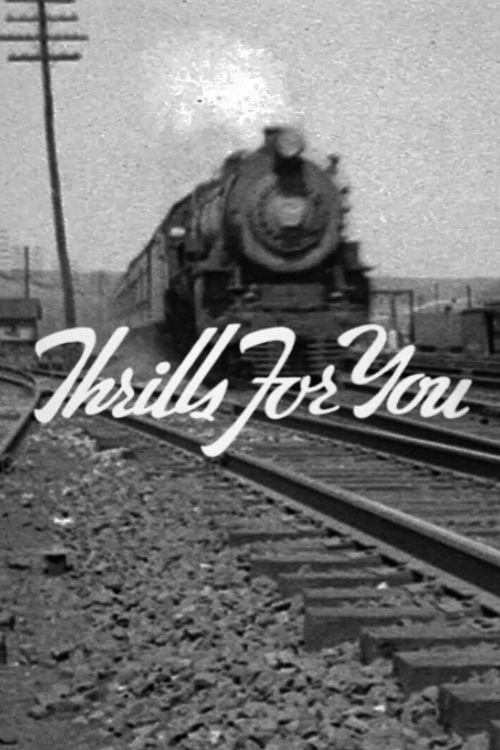
A short documentary profiling the restoration and anniversary exhibition of the titular 4-4-0 steam locomotive, undertaken in honor of the Centennial of the start of the American Civil War in 1961.
A group of people are standing along the platform of a railway station in La Ciotat, waiting for a train. One is seen coming, at some distance, and eventually stops at the platform. Doors of the railway-cars open and attendants help passengers off and on. Popular legend has it that, when this film was shown, the first-night audience fled the café in terror, fearing being run over by the "approaching" train. This legend has since been identified as promotional embellishment, though there is evidence to suggest that people were astounded at the capabilities of the Lumières' cinématographe.
A day in the city of Berlin, which experienced an industrial boom in the 1920s, and still provides an insight into the living and working conditions at that time. Germany had just recovered a little from the worst consequences of the First World War, the great economic crisis was still a few years away and Hitler was not yet an issue at the time.
The Ashmont-Mattapan High Speed Line operates 2.6 miles of track from Ashmont Station to Mattapan Station just south of Boston. We capture this neat little commuter operation in the state of Massachusetts. They operate with all PCC trolley cars! This operation offers a vital link to commuters to get to Boston easily from the suburbs of Boston! It is a landlocked line that connects with the Red Line at Ashmont Station! Filmed in 2022 & 2023 at 7 of the 8 stations.
For 2-4 year old children, the Tomika Prarail friendly hiragana first time drill. Learn hiragana characters with the aid of Tomika Prarail trains and cars.
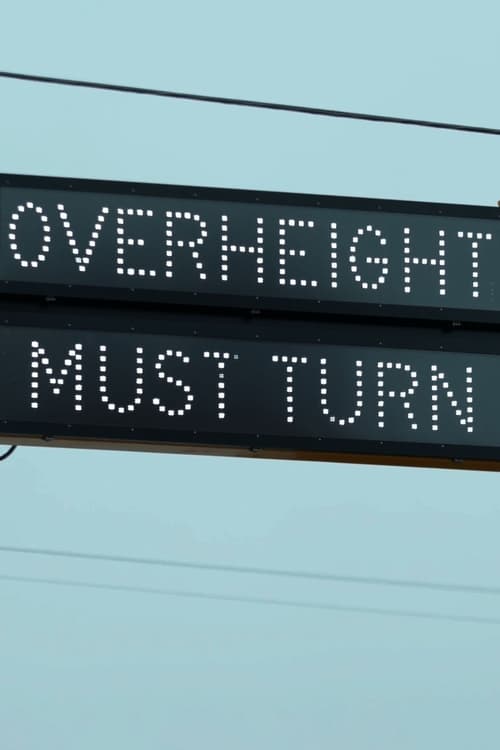
For the past ten years, Jürgen Henn has filmed over-height trucks crashing into the 11foot8 train bridge affectionately nicknamed the "Can Opener." In that time, millions have viewed the crashes online. Regional, national, and international news organizations have dined out on the story and the goofy crash reels. But why do motorists continue to crash despite the many warnings, sensors, and signs? And what is it about these crashes that holds our attention? In this piece, we look for the humanity in human error.
The story of how newspapers were distributed during the Blitz, stressing the importance of an accurate and objective press on the home front.
Take a breathtaking train a ride through Nothern Quebec and Labrador on Canada’s first First Nations-owned railway. Come for the celebration of the power of independence, the crucial importance of aboriginal owned businesses and stay for the beauty of the northern landscape.
How the Monuments Came Down is a timely and searing look at the history of white supremacy and Black resistance in Richmond. The feature-length film-brought to life by history-makers, descendants, scholars, and activists-reveals how monuments to Confederate leaders stood for more than a century, and why they fell.
"CIVIL WAR SURVEILLANCE POEMS (Part 1)" is the first installment in a five-part project of experimental and hybrid-form short films contemplating a second American civil war via lyrical nonfiction, mixing call-in radio, twenty years of verité footage from the filmmaker's archive, and robots. Conceptually speculating from sixteen years in the future (and a protracted civil war), the project is partly nostalgic political travelogue, partly a quest to mine the archive for what went wrong, and part prewar surveillance records, the project deconstructs and builds to a clashing ideology, culminating in an installation of sound sculpture, four-walled video and artifacts.
It is El Salvador, 1989, three years before the end of a brutal civil war that took 75,000 lives. Maria Serrano, wife, mother, and guerrilla leader is on the front lines of the battle for her people and her country. With unprecedented access to FMLN guerrilla camps, the filmmakers dramatically chronicle Maria's daily life in the war.
An encyclopedia of Japanese bullet train vehicles.
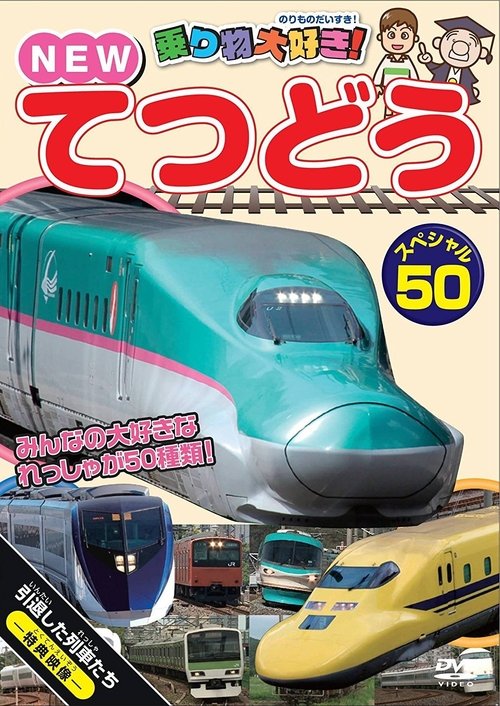
"Tetsudou" version of the series full of popular vehicles for children. Fifty kinds of trains selected from the railway active in Japan such as Shinkansen, SL (steam locomotive), limited express, etc. are recorded with powerful images. Introducing a nostalgic train that is not running now as a bonus picture.
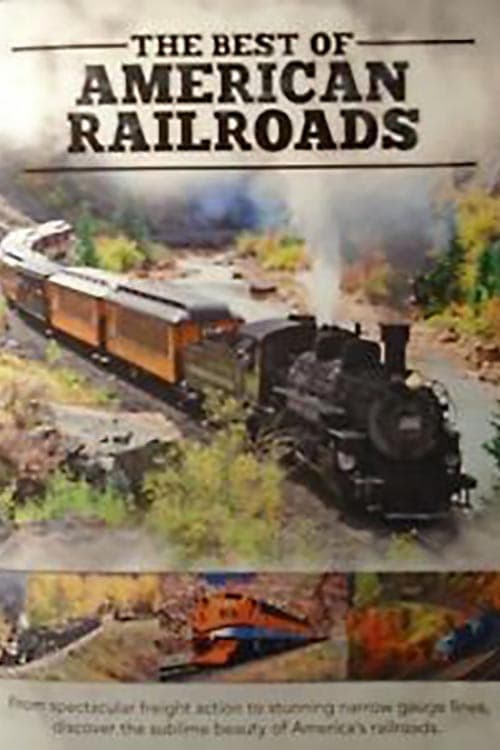
Meet the crew of the Union Pacific Challenger No. 3985, the largest and most powerful steam engine in the world. This colorful documentary is a behind-the-scenes look at the conductors, engineers and mechanics who keep this fickle train running, an engaging history of steam power, and a scenic tour the Great Plains -- from Cheyenne, Wyo., through Denver and across Nebraska to the Omaha headquarters of the Union Pacific.
In the first half of the 20th century, America's railroads were radically transformed by the innovation of gargantuan steam locomotives. Pushed by the need to haul ever longer and heavier trains, the nation's locomotive works responded with the invention of awe-inspiring articulated engines. Delivering up to 7,500 horsepower, these steel behemoths could haul mile-long, 15,000-ton trains. In this riveting program, journey back to the golden age of steam for an up-close look at these legendary locomotives. See the Union Pacific's famed "Big Boy" in action and ride the rails of the Chesapeake & Ohio and Norfolk & Western railways. Meet the men who drove engines like the Allegheny and Yellowstone, and visit the museums and yards where the largest steamers ever built remain preserved in time. THE HISTORY CHANNEL' proudly presents this rollicking retrospective, sure to set any rail fan's heart pounding