On the eve of the marriage of her daughter, Alita, Mrs. Allen, unhappily married for 25 years, advocates writer Fannie Hurst's widely publicized mode of living with her husband: only two breakfasts a week together and complete freedom otherwise.
Bebe Daniels
as Alita Allen
Norman Kerry
as John J. Campbell
Lee Moran
as Arthur James
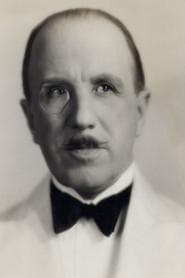
Arthur Hoyt
as Winston Howell
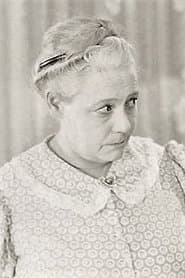
Lillian Langdon
as Mrs. Allen
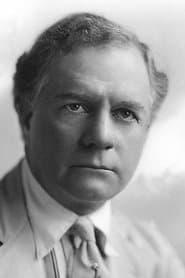
George C. Pearce
as Mr. Allen

An assassinated Lord's daughter refuses to marry a Chinese prince but agrees to be his mistress.
In "Fidlovacka", the name of a Czechoslovakian festival, the proprietress of a cheese factory picks a fiancé for her orphaned niece in her desire to bring aristocratic blood into the family. THe niece has also picked the man she wants to marry and isn't the the rich aristocrat.
Marty Reid, the star quarterback at Sanford College, is constantly singled out by the opposition for punishment, and he swears to his pal, Honey Smith, and to Coach Wilson that he will quit the game forever. Ed Kirby, who dislikes Reid, calls him yellow, and Wilson gets Patricia Carlyle, the college vamp, to induce Reid to play. At a sorority dance, where only football players can cut in, Kirby persecutes Reid by dancing with Pat, and as a result Reid does apply to play in the game.
Fred Midway may be a bit short on brains, but he's got plenty of ambition. However, before he can gain promotion as a salesman, he must make his family more socially acceptable.
New Faces was a musical revue with songs and comedy skits tied together by a quirky plot. It ran on Broadway for nearly a year in 1952 and was then made into a motion picture in 1954. It helped jump start the careers of several young performers including Paul Lynde, Alice Ghostley, Eartha Kitt, Carol Lawrence, performer/writer Mel Brooks (as Melvin Brooks), and lyricist Sheldon Harnick. The film was basically a reproduction of the stage revue with a thin plot added. The plot involved a producer and performer (Ronny Graham) in financial trouble and is trying to stave off an angry creditor long enough to open his show. A wealthy Texan offers to help out, on the condition that his daughter be in the show.
A lighthouse keeper and his daughter are in trouble on two fronts--if the authorities find out he is going blind they will remove him, and a gang of liquor-smugglers is trying to destroy the lighthouse so they can land their illegal cargo on shore without being spotted.
During World War I, Rin-Tin-Tin finds that he must rescue his master, a fighter pilot, from his wrecked aircraft. He also has to help him escape his rival, who has ordered him shot so he can have the girl they're competing for all to himself.
The Österman brothers have come to realize that they need a housekeeper. Oldest brother Kalle travel to town and return with the young and modern Anna.
In a small town in the 1950s a repertory company meets on Monday morning to start rehearsing the following week's play. This is a ghastly thing written by the aunt of one of the theatre's directors. The producer doesn't try to hide his annoyance about it, and is further exercised when the authoress herself arrives to help. The cast have to try and sort out real-life problems that keep intruding as they wrestle with the play's dire dialogue.
To her aunt's dismay, Prudence isn't interested in society life. She'd rather listen to the butler's tall tales of being a pirate. Nixed from a boat trip, she rents a schooner, recruits a crew and raises the jolly roger.
In 1846, Anthony Hope sails into London with the mysterious Sweeney Todd, a once-naive barber whose life and marriage was uprooted by a corrupt justice system. Todd confides in Nellie Lovett, the owner of a local meat pie shop, and the two become partners, as Todd swears revenge on those that have wronged him and decides to take up his old profession.
Five-episode adaptation of the eponymous Russian novel, directed by Pyotr Chardynin et al.
Prosecutor Olsen's lover, the singer-songwriter Betsy, leaves him for a new passion. And he, speaking in court as a prosecutor, remains deaf to the dictates of feelings, a ruthless servant of the harsh Law. Some time later, Betsy kills her new lover in a fit of jealousy; Olsen, who retained his feelings, nevertheless becomes her accuser at the trial. He seeks the condemnation of Betsy, but comes to the realization that he lived unrighteously, allowing himself to be judged, becoming a servant of Themis. Exit in the classic tradition of the great mute: Olsen commits suicide.
Concerned about the future of her three children, a widow takes them to the city with the purpose of getting them married.
William Saroyan's Pulitzer Prize-winning play revolves around the denizens of a San Francisco bar in 1939. Lonely, lovelorn, weary or cynical, the characters drift in and out of the bar and each other's lives, giving voice to Saroyan's philosophies as they randomly comment about the impending world war, the beauty of art, and traditional notions of good and evil. At least one of the relationships stands a chance of enduring: a brawny innocent named Tom is falling in love with a vulnerable young prostitute named Kitty. Saroyan himself is heard reciting the play's prologue.
Captain "Wolf" Larsen, the absolute master of a seal schooner, is a mystic and philosopher, though he rules his men with an iron hand. On a ferry going from San Francisco to Oakland, Van Weyden, a critic, and Maud Brewster, a novelist, meet in masquerade costumes and are forced overboard when their boat collides with a steamer. Humphrey, then Maud, are picked up by Larsen's crew. Because of her costume, Maud is taken for a boy and placed in the custody of Mugridge, the cook, who attempts to attack her upon discovering her identity. Larsen takes her under his protection and decides to marry her; but as the ceremony begins, the crew mutinies, and Larsen is stricken with blindness as he faces the rebels. The ship is set afire, and though Humphrey and Maud are rescued by another steamer, Larsen, deserted by his crew, refuses to quit his ship and is enveloped in flames.
An operator at a mobile pager company has her life turned upside down by a seemingly senseless abduction. Currently considered to be a lost film (never released to the general public, after its theatrical premiere in Puerto Rico).
During the Easter Carnival, Dolores de Cordova flirts with Juan Estudillo, not knowing that he is a member of the family with whom her ancestors have long feuded. Dolores' cousin, Pedro Toral, jealous of her attentions to Juan, kills her brother that night and after leaving Juan's handkerchief by the body, makes Dolores swear to avenge the death with her own hands....