A documentary film showing the life of Niu Hongmiao, a 20-year-old country girl who is now a prostitute in Beijing. Around the time of wheat harvesting, she goes back home to Dingxing County, Hebei Province to visit her parents.
牛洪苗
as
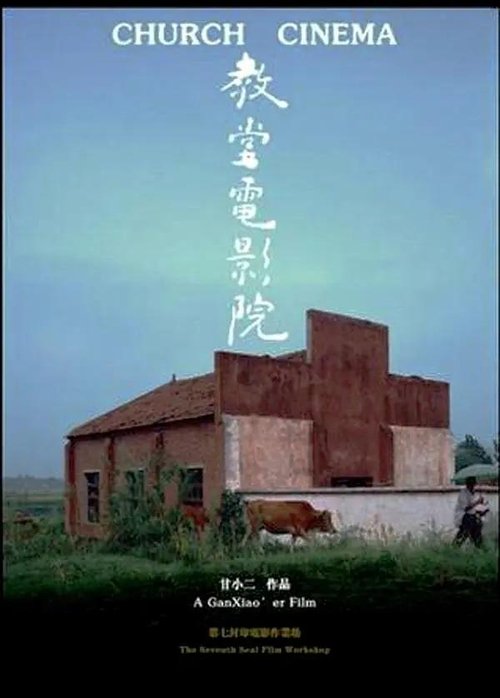
In the summer of 2007, Gan Xiaoer led an independent film projection team, using projectors and self-made screens, to tour villages in Henan province to show his feature film "Raised from dust" for 8 times, and recorded the process. The 81-minute version of Church Cinema records only one stop, the Qiliying Church, where "Raised from dust" was shot.
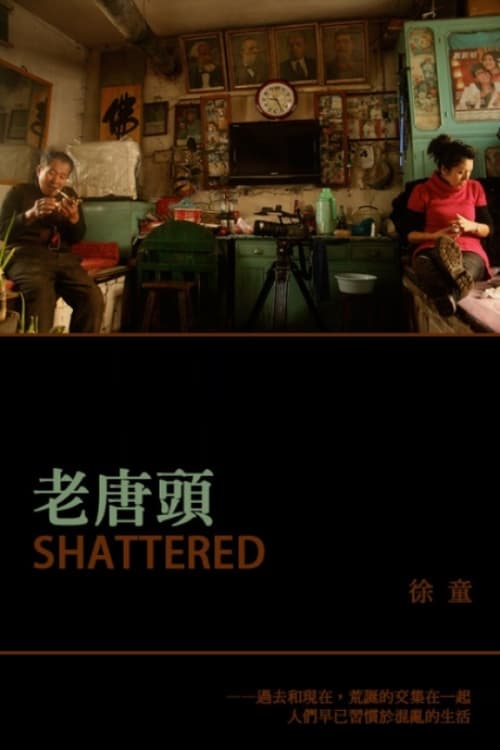
A microcosm of China past and present flows through Xu Tong’s intimate docu “Shattered,” in which the maverick indie filmmaker continues to refine his techniques and concerns shown in his previous “Wheat Harvest” and “Fortune Teller.”
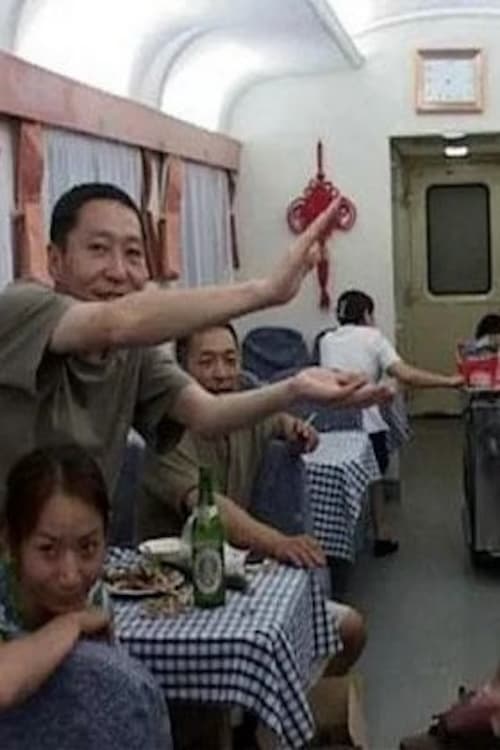
A Jian, Zhang Chiand Gou Zi took the train from Beijing to Tongliao. They made a promise that no one could speak during the trip, and who broke the rules should be punished. But it's still necessary to pick up some phone call, ask the way after you get off the train...For educated decadents, life is as if always in a state of intoxication, without goal or objective.
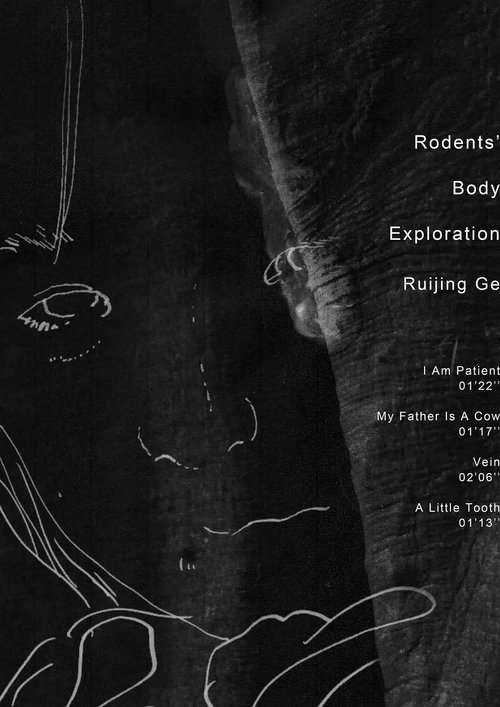
The artist works around the different individual experiences which consolidates the different changes in the body while examines intimate relationships under the structure of the disease, all by making her experience visible and public. Within the realms of Ruijing’s discussions, she hopes for the work to push the boundaries of the marginality of the body, for the work to allow oneself to look at their and others’ body in an objective manner that escapes the ontological. She further wished for the experience of living and the reflection on the mass would help the discovery of the self and its connection with society, while reflecting on life itself by doing so.
Bao, a blind woman, sings every day on the streets of Peking to make a living. She is caught up in an endless lawsuit in the hope of having some money reimbursed while doing her best to rear Ming Ming, her mentally ill daughter. After a car accident, and to her mother's great despair, Ming Ming decides to drop out of school and become a street artist. History seems to repeat itself.
I just watch the news of war in a distant country on my mobile. My fingers go back day by day to the day the war broke out and pose to see comments posted on the Facebook News Feed that I follow. Outside, I have friends who participated in anti-war rallies.
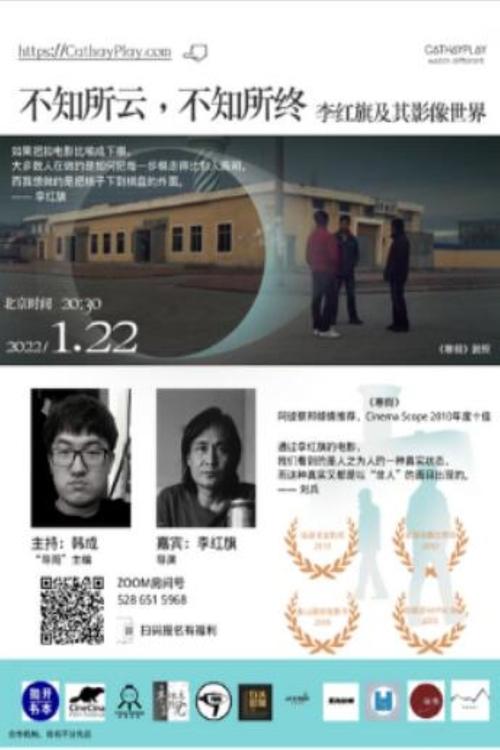
In this talk, Li Hongqi reviewed his transition from fine art to cinema, and his aesthetic and philosophical exploration from his early 'So Much Rice' to recent 'The The'. Dir. Li Hongqi also shared his strong anxiety of his existence(born with melancholia), his thought on cinema art (actually, I don't think there's any movie worth making), his epistemology, his religious view, his consideration on contemporary cinema, and what he learned about living in seclusion.
This investigative documentary gives a comprehensive record of the development of China's "August 3 Crackdown on Mafia" campaign. Li Xiaoming, the main character of the film, escapes from the incident and goes through many ups and downs. The film explores that period from a personal point of view, slowly revealing the untold story of that period.
The player of Jia Zhangke's early film "Xiao Wu" and the famous independent film activist Wang Hongwei talked about Chinese independent films at the IFF Independent Film Forum.
‘Body’ is an object we are all familiar with. For British sculptor Anthony Gormley, it is a medium for expressing thoughts about space, while for young female artist Wang Ying, it is a potential vehicle for expressing emotions. This documentary uses a split-screen method to create a three-dimensional space like a "body". It not only explores the artistic concept and development of Wang Ying, a female artist born in the 1990s who studied in the UK but also completed it on this basis. The documentary creator (me) thinks about her and her body, from'meeting','seeing' to'existence'
In the dream I had one early morning in 2014, I was sitting in the backseat of a car. The driver suddenly turned to look at me and said: Why aren’t you filming? It was my second elder sister who had already passed away. After her death, I began to keep a diary and take pictures. When I got a video camera, I began to film the daily life of my family. I filmed out of the fear of death and loss. The idea was to capture everything on film before it disappeared. 2015 was the 20th anniversary of my sister’s death. That dream seemed to tell me to face her death. Death did not stop the passing of time, and the family members I was filming continued to avoid their grief which hadn’t subsided with time. Birth and death continue to alternate in our lives, and we are always getting ready for the day when we must say goodbye.
This is a film about the unison between the four seasons of life and the four seasons of the year, intertwined with the geospatial and temporal dimensions of a small town named Tongchuan situated on the northwest of the Loess Plateau.
An individual's life experience is always a reflection and epitome of the times. Through the environment, literature, oral narration, calligraphy and painting works, this film faithfully records the upbringing background, family circumstances and life of the painter Chen Jiyong. His life experience and mind-watching are an ordinary case of countless intellectuals who have disappeared in the dust of time. At the same time, he has become a sample of images and life statues about this period of history.
The film records the emotions and destinies of seven single women. Whether at a loss, confused, waiting in hope, disappointed, helpless, compromised, independent or defiant, they are closely bound up to this agitated and chaotic era. Through their different experiences they tell us about the failed marriages of middle-aged women, about life being single, and about a group of men who have not yet showed up but who appear vivid from a female perspective.
This is an image of a family. Through the memories of many people, it traces the growth, migration and different life experiences of several generations of the author's family. It shows the destiny of ordinary people and their inner scenery in social transformation. Each generation has its own joy and pain, and life still continues in hope, hardship and helplessness. The various imprints of survival that remain in the film are the hard riverbed of individual life and a period of micro-history washed out by time
This is a documentary filmed in a subjective perspective. Without any commentary, the film records, in the switches and transitions of the faces, the gamut and track of emotions and vision of the author in enjoying the photographs by Koudelka—from the scenes of life in “Gypsies”, to the conflicts in “Invasion”, further to the still images in “Exiles”, and finally focused on desolately dignified “Chaos”. The four chapters of the film echo the four photo albums of Koudelka. With the indoor CD player playing the music by Shostakovich, the invasion of the landscape without the windows, intermingled with the background noise, complicates the ambient circumstances of the film and renders an immediate sense of urgency and relevance.
This is a documentary about faith, narrating the stories of a dozen or so Christians in the city of Tongchuan, in Shaanxi Province. Through the lives and beliefs of four generations of preachers, the film reflects on the profound influence of 50 years of social change on the local church. Whether recounting personal setbacks encountered on the serving path or people’s weaknesses, growth, or disputes within the church community, the film becomes a neutral and faithful portrayal of a group of preachers, of the history of the church community and of the status-quo of belief in this faithless era.
On April 6, 2001, a gas explosion occurred in the Chenjiashan Coal Mine of the Tongchuan Mining Bureau in Shaanxi Province, killing 38 people. On November 28, 2004, a gas explosion occurred in the Chenjiashan coal mine, and 166 people were killed. Five years later, Lin Xin, the son of the miners, filmed this film about mine disasters. Through the oral interviews of more than 20 people, such as miners and family members of the victims, and random interviews on the street, the film presents the real life of the miners and the cruel and complicated social reality behind the mine disaster from different angles. This film is the end of Lin Xin's "Trilogy of Survival".
Twenty plus classmates look back into the past, tracing back through a 30 year history. One after another adapts to the random events that come to shape their lives, to the four seasons of life and nature. The years they were about experience coincided with the reforms and opening up of China. Floating in the changes of the new era, some experience compromises and the loss of ideals, whilst some keep struggling ahead with great determination. Thirty years later, Lin Xin encounters his old classmates, and records their individual lives and history; the ease of monotony, the loneliness of success, the weariness of a life of plentiful, the helplessness of poverty... all come forth in the lives of these group of people, becoming an epitome of the lives of ordinary people in small to middle-sized cities in this era, and at the same time reflecting on a generation that advances forward undefeated.
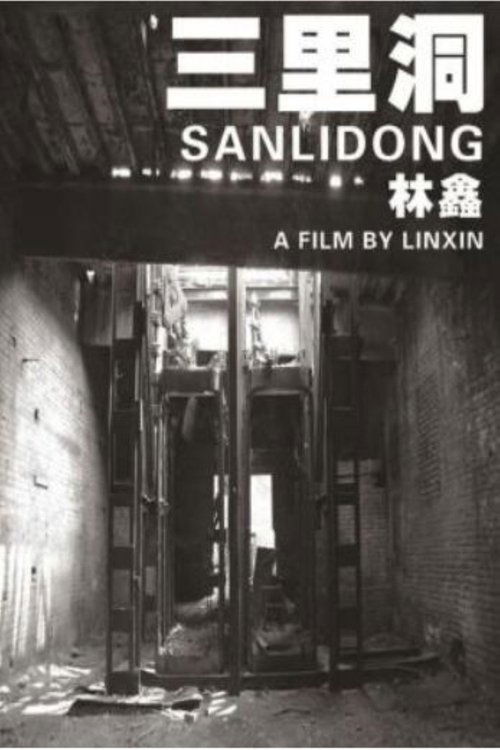
This is a documentary about the father of a miner. In 1955, more than 300 young people from Shanghai came to Sanlidong Coal Mine in Tongchuan City, Shanxi Province with the hope and dream of supporting the construction of the Northwest. After 50 years, most of the builders of that year were gone. In the land where black coal is buried, the fate and breathing of the miners are always stirring. The film uses 15 clips to record the old miners, the deceased and the era that is still living in the area, witnessing the tenacity and dignity of life with a group of miners. They are: Shu Guoqi, Gu Longxiang, Shen Longgen, Wang Zhengxiang, Yao Hongchang, Ge Dengfa, Zhang Baisheng, Lu Rongchu, Zhou Shougen, Luo Shijun, Ding Fuzhen, Tong Guang, Gao Zhangshun, Chen Yixiang, Zhu Yongsheng.