Lights flicker & fade as focus shifts from artificial to natural light, ending on a second artificial light speeding through the blackened miasma of the night sky.
This fantastical movie inspired by the music of Michael Jackson features imaginative interpretations of hit tracks from the iconic 1987 album βBadβ.
Wax and wane until there is naught but boring pain.
Lines align during acclimated apexes, shadowy vertices, and bright burrows.
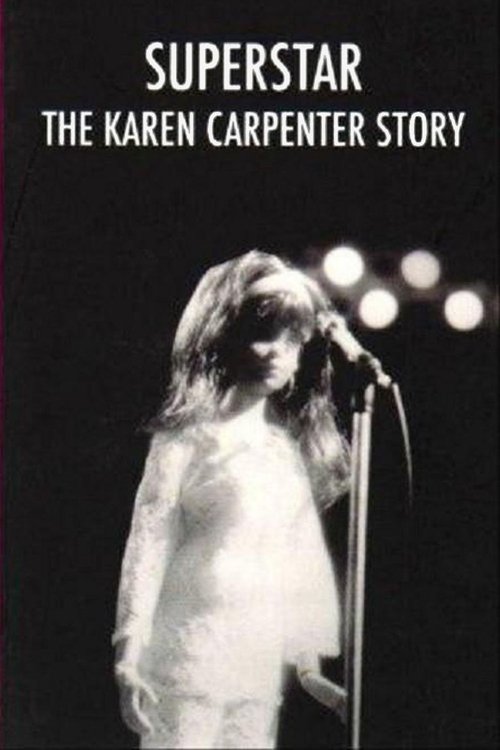
The final 17 years of American singer and musician Karen Carpenter, performed almost entirely by modified Barbie dolls.
A story of an artist entertainer who swallowed razors, glasses, records, light bulbs, nails, forks and everything else hard to swallow. Cannibalism and auto-cannibalism included.
Surrendering the mind to the hypnotic dance of fire, a candle's glimmer reveals dreamlike memories, illustrated by flickering fragments of experimental films that overlap alongside a deconstructed soundscape. Entering a hallucinatory state in a haunted ambience, one's own subconscious is put on display.
Don't ask me why, but I feel we're about to cry trying.
To break in their new studio, EMPRESS, Castle Atom performs four songs and give us a glimpse behind the scenes of how they record. Songs include: "Years of Blood", "Where Have You Been", "Farewell My", and a previously-unheard track, "Hey-E".
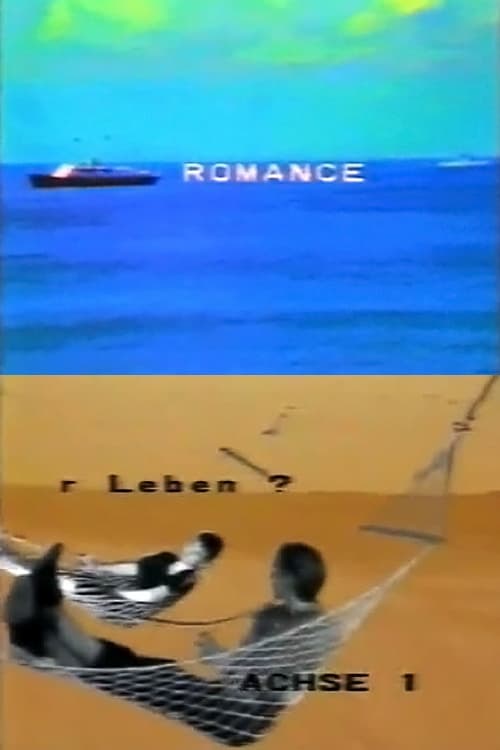
A huge, run-down apartment in Berlin Mitte. Two women and a man, rehearsals for a movie about love and sex, that will never be shot. Acting and reality mingle into a dangerous mΓ©lange.
A poetic, semi-autobiographical short film of the sun setting over a village, shot from behind the curtains of a small, dimly lit room.
Dislocation in time, time signatures, time as a philosophical concept, and slavery to time are some of the themes touched upon in this 9-minute experimental film, which was written, directed, and produced by Jim Henson. Screened for the first time at the Museum of Modern Art in May of 1965, "Time Piece" enjoyed an eighteen-month run at one Manhattan movie theater and was nominated for an Academy Award for Outstanding Short Subject.
An ambient representation of depression with a slowly fading score building towards an uncertain climax.
CREMASTER 5 is a five-act opera (sung in Hungarian) set in late-ninteenth century Budapest. The last film in the series, it represents the moment when the testicles are finally released and sexual differentiation is fully attained. The lamenting tone of the opera suggests that Barney invisions this as a moment of tragedy and loss. The primary character is the Queen of Chain (played by Ursula Andress). Barney, himself, plays three characters who appear in the mind of the Queen: her Diva, Magician, and Giant. The Magician is a stand-in for Harry Houdini, who was born in Budapest in 1874 and appears as a recurring character in the Cremaster cycle.
Part of a collection of restored early works by Nam June Paik, the haunting Beatles Electronique reveals Paik's engagement with manipulation of pop icons and electronic images. Snippets of footage from A Hard Day's Night are countered with Paik's early electronic processing.
A visual interpretation of the poem by E.E. Cummings about the life cycle of a townspeople and of one ignored couple.
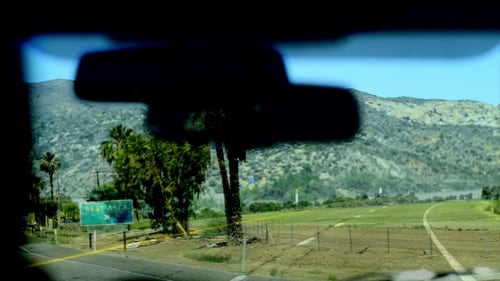
The film is made up of one single take. The camera pans to the left, focusing on a dilapidated fence in a rural field, as Ella Fitzgerald's "All My Life" plays on the soundtrack. At the end of the 3 minute film, the camera tilts up to the blue sky just as the song ends.
A.D. 2015: A virus has been spreading in many cities worldwide. It is a suicidal disease and the virus is infected by pictures. People, once infected, come down with the disease, which leads to death. They have no way of fighting against this infection filled with fear and despair. The media calls the disease the "Lemming Syndrome".
In a deconstruction of classic Hollywood codes, using repetitive single frame images, the re-editing of teenager movies produces an intense Oedipal drama.