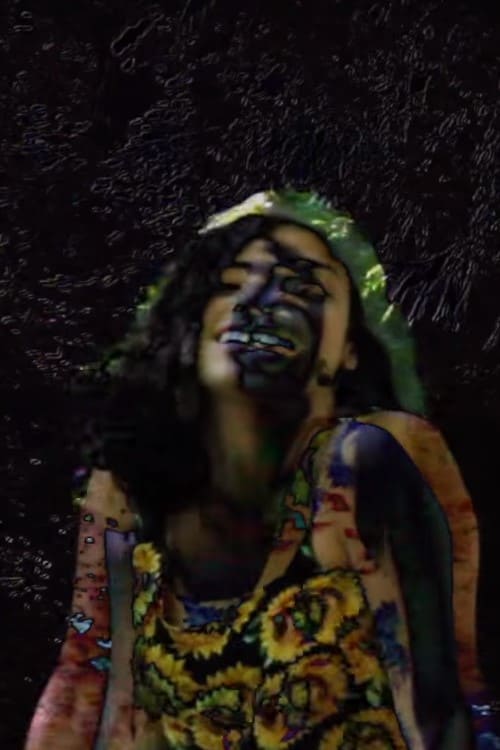
Footage filmed in Spain, subjected a new visual effects process. Deslaw devoted himself to the discovery of a new machine that enabled film to be developed while using a new method called solarisation.
The history and art of ikebana, a centuries old Japanese art of flower arrangement and a look inside the Sogetsu School of Ikebana, where the director's father Sofu Teshigahara worked as the grand master of the school.
Early Edison short showing two men fencing.
William K.L. Dickson and William Heise shake hands in this early experimental film.
Experimental, cinematic symphony of Granada, José Val del Omar's birthplace.
New York City's Monterey is a residence hotel, whose inhabitants are older and primarily live alone. The camera, usually stationery, observes the lobby. No score, the lobby is clean with granite floors, men wear hats, people enter and exit an elevator, the camera looks out from within the elevator as doors open and close. People sit alone and motionless in their apartments. There are long shots of empty halls. Paint peels. The flooring on upper levels is linoleum. Hall lights are florescent. Doors open a crack then close.
Filmed by Jonas Mekas from the 44th floor of the Time-Life Building, “Empire” explores the passage of time without the use of characters or a traditional narrative. The film, that consists of one stationary shot of the Empire State Building, was made from standard 1,200-foot rolls of 16mm film with a more than eight-hour runtime.
A black-and-white visual meditation of wilderness and the elements. Wildlife filmmaker Richard Sidey returns to the triptych format for a cinematic experience like no other.
Building as a magic lantern preserving small stories of human interactions throught clear permutations in the editing room, a work that want to understand the beauty of noises and the meaning of departure, going far away.
A very personal look at the history of cinema directed, written and edited by Jean-Luc Godard in his Swiss residence in Rolle for ten years (1988-98); a monumental collage, constructed from film fragments, texts and quotations, photos and paintings, music and sound, and diverse readings; a critical, beautiful and melancholic vision of cinematographic art.
Morir en Madrid brings together several papers on the Spanish Civil War and integrates capturing different points of view, intended to represent the continuity of the suffering of the Spanish during the Franco regime. The death of Federico Garcia Lorca, Guernica, the defense of Madrid, the International Brigades, are some of the items comprised in this document.
A playful, free, and personal film in the form of a letter, a film interwoven with a thousand stories knit together with different textures, a book of images where a filmmaker shows the images and the stories he wants to share.
Often called a “film poem” or a “film symphonie” Huszárik’s masterpiece consists of montages of horses from the dawn of time to the modern times from cave paintings to horse races.
The faces of a 5:00 PM crowd descending via the Pan Am building escalators in one continuous shot. In old-fashioned black and white, these faces stare into the empty space, in the 5:00 PM tiredness and mechanical impersonality, like faces from the grave.
Songs for Drella is a concept album by Lou Reed and John Cale, both formerly of The Velvet Underground, and is dedicated to the memory of Andy Warhol, their mentor, who had died unexpectedly in 1987. Drella was a nickname for Warhol coined by Warhol Superstar Ondine, a contraction of Dracula and Cinderella, used by Warhol's crowd. The song cycle focuses on Warhol's interpersonal relations and experiences, with songs falling roughly into three categories: Warhol's first-person perspective (which makes up the vast majority of the album), third-person narratives chronicling events and affairs, and first-person commentaries on Warhol by Reed and Cale themselves. The songs on the album are, to some extent, in chronological order.
Old Tjikko: a 9.550 years old tree standing alone in the Swedish tundra. Surtsey: an island born only 63 years ago on the coast of Iceland. Lotus Gomeritus: the last and only known specimen of a plant species discovered in the Canary Islands. Through these three main subjects of observation, and many other images collected through a process that took over ten years, photographer Aleix Plademunt and filmmaker Carlos Marques-Marcet set up a meditation on how we construct our world through looking and the complex relationship between images and the spoken language.
A one-hour documentary on the making of Frank Zappa's bizarre 1971 comic musical. Vintage private footage from Frank's personal archives plus behind-the-scenes of the actual shooting and recording. With Ringo Starr, Theodore Bikel, Keith Moon and such songs as "Sleeping in a Jar," and "Strictly Genteel." The inside history of the first feature-length film to be shot on video in 6 days.
Chao-Li Chi shadow boxes indoors and practices with a sword outdoors. Theoretically, the film describes in a single continuous movement three degrees of traditional Chinese boxing, Wu-tang, Shao-lin, and Shao-lin with a sword. A long sequence of the ballet-like, sinuous Wu-tang becomes the more erratic Shao-lin; in the middle, there is an abrupt change to leaping sword movements, in the center of which, at the apogee of the leap, there is a long held freeze-frame.
Experimental film fragment made with the Edison-Dickson-Heise experimental horizontal-feed kinetograph camera and viewer, using 3/4-inch wide film.