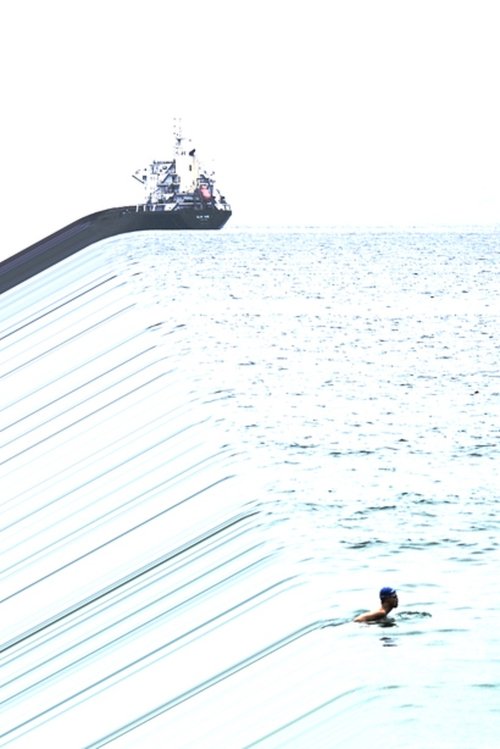
One of Paik’s most overtly political and poignant statements, Guadalcanal Requiem is a performance/documentary collage that confronts history, time, cultural memory and mythology on the site of one of World War II’s most devastating battles.
Charlotte Moorman
as
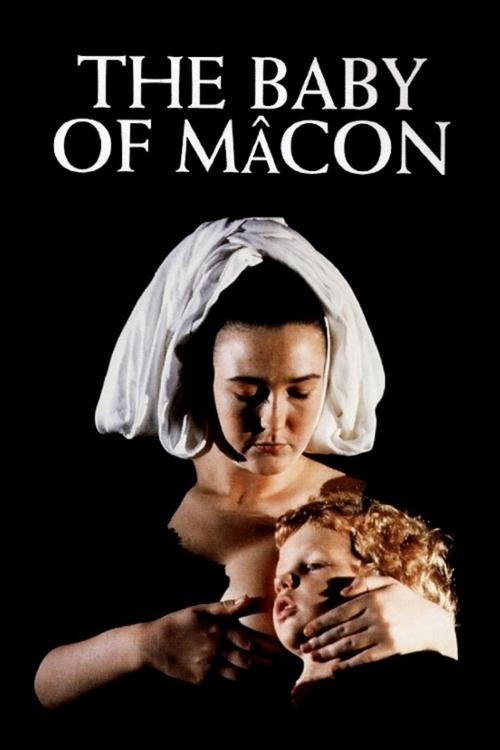
In 17th-century Tuscany, a church play is performed for the benefit of young aristocrat Cosimo. In the play, a grotesque old woman gives birth to a beautiful baby boy. The child's older sister is quick to exploit the situation, selling blessings from the baby, and even claiming she's the true mother by virgin birth. However, when she attempts to seduce the bishop's son, the Church exacts a terrible revenge.
A watchman at an apartment complex in Assam, India, spends an ordinary evening. A surreal, expressionistic landscape unfolds.
The first film made by Markopoulos after moving to Europe, Bliss was shot over the course of two days using only available light to create a lyrical study of the interior of the Church of St. John on the island of Hydra.
A film of and through the trees. Leaves catch, consume and resist the light through the seasons.
The world appears black on black until it separates from itself, looks at itself, includes itself, and sees colour.
Starting from frame by frame in-camera editing, the film translates a nursery garden from Chillán into a filmic landscape, with a rhythm and structure coming from a personal relationship with color, light and occurrences that took place near the end of the summer at the Olaxis garden. This is the first part of a work which takes reference from Violeta Parra's poetry, created from flowers, plants and certain places of the Ñuble area.
A depiction of a girl’s uneasy state of mind as it wavers between life and death.
16mm film (color, sound); 16 min.
Amateur footage of a young couple on a trip.
Electro-Pythagorus is an intimate and subjective portrait of the late Martin Bartlett, the Canadian electronic music pioneer who studied with Pauline Oliveros, David Tudor, John Cage, and Pandit Pran Nath. His contribution as an interdisciplinary composer, educator, and founding member of Western Front, though undoubtedly extensive, is in danger of being erased from cultural memory since his death from AIDS in 1993. Navigating an array of archival materials including letters, correspondences, notebooks, personal photos, and a huge body of unreleased music and field recordings held at the archives of Simon Fraser University, Electro-Pythagoras is a journey through the evolution of Bartlett’s musical time and space, softly guided by Luke Fowler’s insightful camera and montage—creating an experimental portrait that defies one-dimensionality.
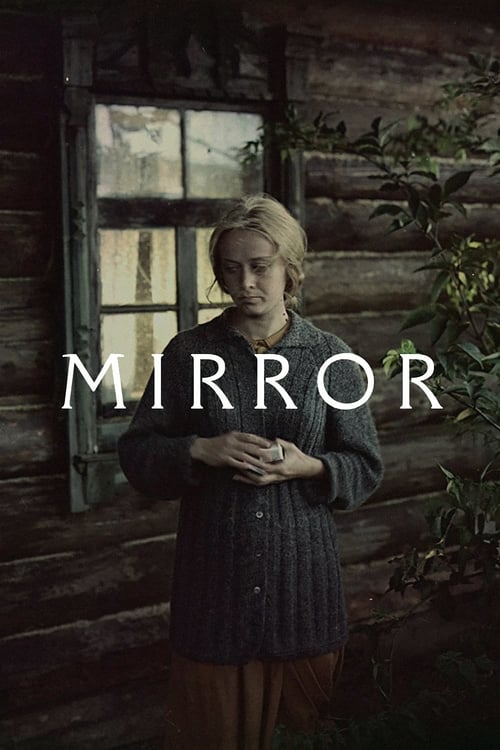
A dying man in his forties recalls his childhood, his mother, the war and personal moments that tell of and juxtapose pivotal moments in Soviet history with daily life.
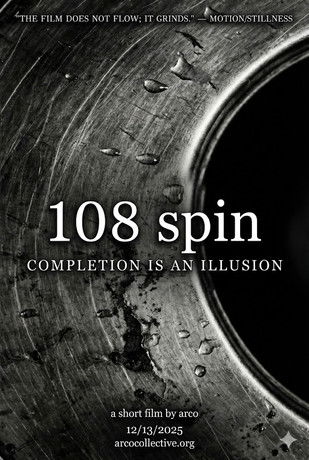
A kinetic prayer and structuralist intervention. Shot entirely on an iPhone 11 in a desolate Midwest laundromat, 108 spin documents the mechanics of impermanence. The film shifts from heavy turbulence to suspended repetition—not as a path to completion, but as a study of the loop itself. Featuring a layered soundscape, the work asks the viewer to stare into the rotation until the noise becomes a mantra.
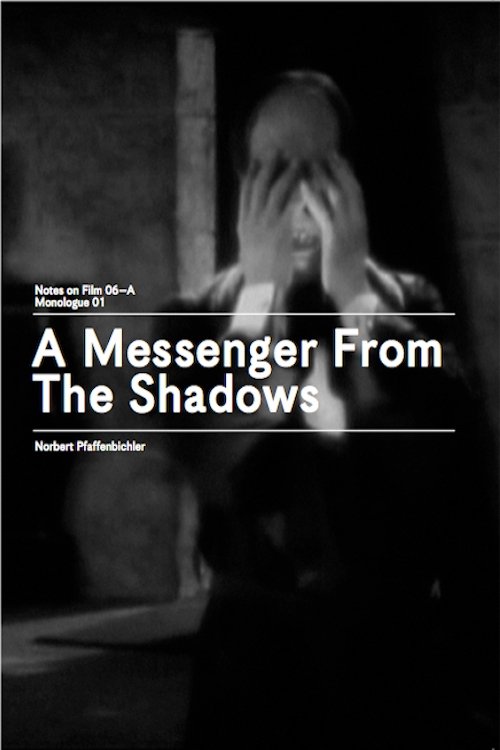
Thanks to his myriad film roles, Lon Chaney is known as “the man of a thousand faces,” and you could say that the early horror era never beheld a figure more intriguing. Yet because of his numerous transformations, his face never became as iconic as that of, say, Boris Karloff. Accompanied by a soundtrack from Bernhard Lang, this “re-imagination of shots” taken from Chaney´s forty-six surviving films offers a beguiling excursion into the history of film. The director reveals surprising associations, while highlighting the enduring magic of works which are now more or less forgotten.
Television was invented as a result of scientific and technical research. Its power as a medium of news and entertainment altered all preceding media of news and entertainment
Shenzhen River (the border btw Hong Kong and Shenzhen), and the Second Line of Shenzhen Special Economic Zone (the border between Socialism China and Capitalism China) were compared to the Berlin Wall. The Second Line were constructed June 1982, demolished June 2015. The First Line (Shenzhen River) still flows, running deeper and deeper after 1997. Artist Miaoyuan LONG and Zen LU (the ON/OFF media Group) documented major checkpoints along these two boundaries. It’s a piece to illustrate the Big Escape (Touch Base Policy) from mainland China to Hong Kong during 1950-70’s and the geopolitical history of Shenzhen. The 48min audio-visual live performance version was Official selection of Draft Systems 2017 WRO Media Art Biennale, Poland.
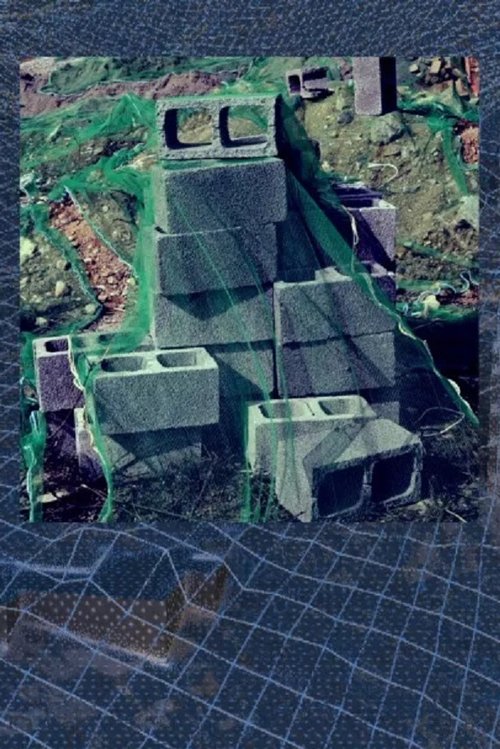
Video essay ‘Rock and Cliff' investigates the creation of Horn Town, a new model village and centre of large scale tourist development, and the experiences of rural residents moved there through government-led displacement. Horn Town is located in Wulong, a rural district near the Three Gorges Dam administered by the Chongqing municipality (a city of 30 million people). Narrated in the style of a science documentary but using local Chongqing dialect, the video brings a geological and topographical perspective to types of 'rocks' found in the area,from mythological stones from a mountain cliff, to ruins of the original settlement, to a stone sculpture from a dubious 'Land Art Biennial', in order to address issues of land acquisition, top-down development and spatial politic.
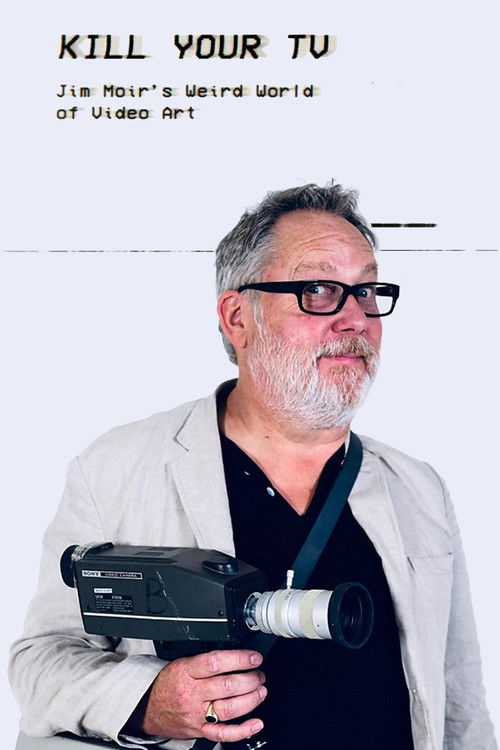
Jim Moir (aka Vic Reeves) explores Video Art, revealing how different generations ‘hacked’ the tools of television to pioneer new ways of creating art that can be beautiful, bewildering and wildly experimental.