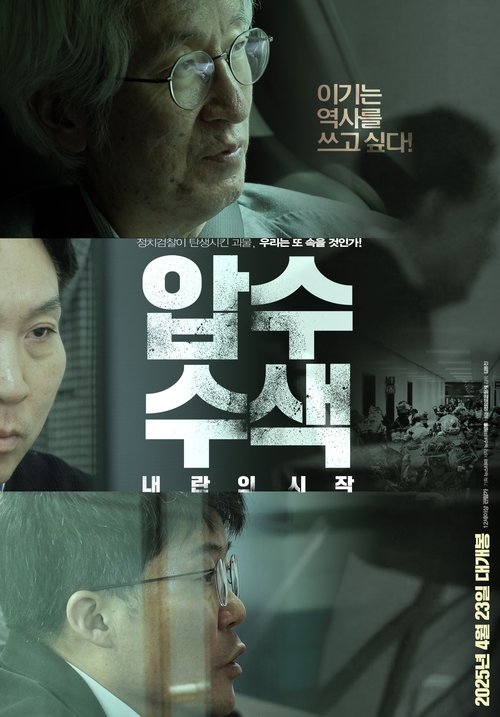
The causes of the crisis. The background of the crisis. The effects of the crisis. Irrational corruption. Social involution. Dysfunctional government. Apeocracy has arrived.
Brian Cohen is an average young Jewish man, but through a series of ridiculous events, he gains a reputation as the Messiah. When he's not dodging his followers or being scolded by his shrill mother, the hapless Brian has to contend with the pompous Pontius Pilate and acronym-obsessed members of a separatist movement. Rife with Monty Python's signature absurdity, the tale finds Brian's life paralleling Biblical lore, albeit with many more laughs.
During the final weeks of a presidential race, the President is accused of sexual misconduct. To distract the public until the election, the President's adviser hires a Hollywood producer to help him stage a fake war.
Dictator Adenoid Hynkel tries to expand his empire while a poor Jewish barber tries to avoid persecution from Hynkel's regime.
A neo-nazi sentenced to community service at a church clashes with the blindly devotional priest.
A trigger-happy Nationalist fears retribution from the son of a man he executed. To mollify the boy's anger, he takes a drastic step: he keeps constant watch over the fig tree the boy has planted at his father's gravesite. As the years pass, the man's lonely vigil makes him a tourist attraction, much to the chagrin of his former colleagues.
Chris Marker and François Reichenbach document the massive anti–Vietnam War protest held in Washington, D.C., on October 21, 1967, where more than 100,000 demonstrators gathered at the Lincoln Memorial before marching on the Pentagon. Filmed amid the crowd, the short captures the tension, idealism, and growing radicalism of the American peace movement.
The Marquis de la Chesnaye and his wife host a weekend gala where a variety of complicated romantic and social entanglements between guests and servants lead to tragedy, all against the backdrop of a looming war.
When the nefarious Dark Helmet hatches a plan to snatch Princess Vespa and steal her planet's air, space-bum-for-hire Lone Starr and his clueless sidekick fly to the rescue. Along the way, they meet Yogurt, who puts Lone Starr wise to the power of "The Schwartz." Can he master it in time to save the day?
In this daring follow-up to The History of White People in America, comedian Martin Mull takes us on an in-depth look at such topics as White Religion, White Stress, White Politics, and White Crime.
A film that "exposes" the creators of abstract, constructivist, surrealistic painting. The horrors experienced by the artist in the world of pictorial abstractions force him to return to "realism"
After growing up poor in Salmonella, Vincenzo Cortino installs himself as the preeminent, if bumbling, Mafia don of the New World. But now he must pass on power to one of his two sons: either level-headed veteran Anthony or vituperative loose cannon Joey.
Bounced from her job, Erin Grant needs money if she's to have any chance of winning back custody of her child. But, eventually, she must confront the naked truth: to take on the system, she'll have to take it all off. Erin strips to conquer, but she faces unintended circumstances when a hound dog of a Congressman zeroes in on her and sharpens the shady tools at his fingertips, including blackmail and murder.
In the 1968 movement in Paris, Jean-Luc Godard made a 16mm, 3-minute long film, Film-tract No.1968, Le Rouge, in collaboration with French artist Gérard Fromanger. Starting with the shot identifying its title written in red paint on the Le Monde for 31 July 1968, the film shows the process of making Fromanger’s poster image, which is thick red paint flows over a tri-color French flag. —Hye Young Min
After his mistress runs over a black teen, a Wall Street hotshot sees his life unravel in the spotlight; A down-and-out reporter breaks the story and opportunists clamber to use it to their advantage.
Documentary about the history of the progressive Farmer-Labor movement in Minnesota from 1915 to 1944, when the party merged with the Democrats to form the DFL, the Democratic-Farmer-Labor Party.
Paul Robeson: Here I Stand presents the life and achievements of an extraordinary man. Athlete, singer, and scholar, Robeson was also a charismatic champion of the rights of the poor working man, the disfranchised and people of color. He led a life in the vanguard of many movements, achieved international acclaim for his music and suffered tremendous personal sacrifice. His story is one of the great dramas of the 20th century, spanning an international canvas of social upheaval and ideological controversy.
This is the story of an ordinary man transformed by history. A simple baker from Besançon who became a political symbol of resistance. That of a France that knows how much it needs others to grow. Of working classes rejecting the siren calls of populism. He says: "I was nothing and I became a monster" to express the vertigo of his transformation. And so the baker entered politics, visited the United States in the footsteps of Martin Luther King, brought aid to the Ukrainians, and ran for legislative elections. Fearless. Fighting with all his heart. It is this inspiring, touching, and funny human epic that Pedro da Fonseca's camera followed closely, capturing his doubts, his hesitations, and his emotions.