Things That Do Us Part is a documentary that reframes the stories of three women fighters who dove into a tragic war in modern Korean history, using witness statements and reenactments.
Jeong Jeong Hwa
as
Kim Dong-il
Go Gye-yeon
Yoon Soo-ryeon
Kang Na-ra
Park Se-hyun
Kim Sun-hyung
As the Salo Republic crumbles around him, Mussolini, along with his mistress and several of his ministers flee with retreating Nazi soldiers, but are caught at the town of Dongo by red partisans. All are brutally executed without trial.
An Jung-geun fights for Korea's independence from the Japanese Empire and sparks a movement. In 1909, he assassinates Itō Hirobumi, the first prime minister of Japan and resident-general of Korea.
John Ford's documentary about the early battles of the Korean War, shot in color.
The son of a Chosun Dynasty general, Kim Du-han finds himself orphaned when the dynasty ends and the Japanese colonize Korea in the early 1900's. He sets out to build a resistance army in this historical drama.
Shedding new light on a geopolitical hot spot, the film — written and produced by John Maggio and narrated by Korean-American actor John Cho — confronts the myth of the “Forgotten War,” documenting the post-1953 conflict and global consequences.
In this powerful tale about the rise of Korea’s global adoption program, four adult adoptees return to their country of birth and reconnect with their roots, mapping the geographies of kinship that bind them to a homeland they never knew.
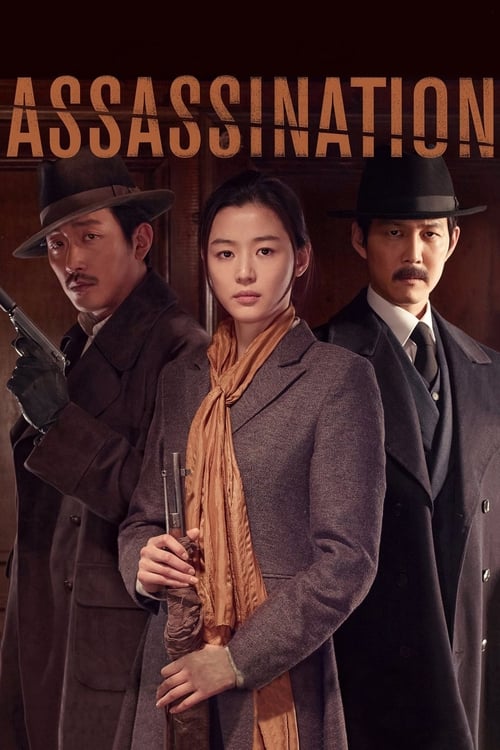
In 1909, several years after Korea is forced into becoming a Japanese colony, freedom fighters plot the daring assassination of Japan's prime minister during their quest for independence.
22nd of August, 1945. Japan lost the war and they loaded an 8,000 person Joseon laborer force onto a ship called the Ukisima to take them to the Busan Port. However, the ship sunk into the water due to an unknown blast. This is the story of thousands of Joseon people who dreamed of returning to their families and how they died.
In 1992, KIM Bok-dong, reported herself as a victim of the sexual slavery, "comfort women" during World War Ⅱ. She wanted to receive the proper apology from the Japan government but they denied its responsibility. In 2011, commemorating the 1000th Wednesday demonstration, Statue of Peace was installed in front of the Embassy of Japan. The fight over Japan confronts a new stage.
The film deals with the rights of Japanese-Koreans -born in Japan but without Japanese passport or nationality- and the social rejection that they face if they don’t integrate completely, abandoning their Korean identity. The film’s main thread is the story of a Korean man, who in the times of the Japanese occupation of the Korean peninsula, is sent to Japan to fight along with the Japanese in the Philippines, but after the war and fearing discrimination, creates a Japanese identity for himself and manages to get married and have children without his family ever knowing about his origins for 50 years until he is arrested in 1985 for forging official documents and in suspicion of being a spy from North Korea. (…) © timegoesbyin.wordpress.com/tag/i-wanted-to-be-japanese
When the MV Sewol ferry sank off the coast of South Korea in 2014, over three hundred people lost their lives, most of them schoolchildren. Years later, the victims’ families and survivors are still demanding justice from national authorities.
Can a language save your life? Yes it can, even an ancient one from the 15th century. Saved by Language tells the story of Moris Albahari, a Sephardic Jew from Sarajevo (born 1930), who spoke Ladino/Judeo-Spanish, his mother tongue, to survive the Holocaust. Moris used Ladino to communicate with an Italian Colonel who helped him escape to a Partizan refuge after he ran away from the train taking Yugoslavian Jews to Nazi death camps. By speaking in Ladino to a Spanish-speaking US pilot in 1944 he was able to survive and lead the pilot, along with his American and British colleagues, to a safe Partizan airport.
May, 1980. Man-seob is a taxi driver in Seoul who lives from hand to mouth, raising his young daughter alone. One day, he hears that there is a foreigner who will pay big money for a drive down to Gwangju city. Not knowing that he’s a German journalist with a hidden agenda, Man-seob takes the job.
Ancient Korea, 17th century. The powerful Khan of the Jurchen tribe of Manchuria, who fights the Ming dinasty to gain China, becomes the first ruler of the Qing dinasty and demands from King In-jo of Joseon to bow before him; but he refuses, being loyal to the Mings. On December 14th, 1636, the Qing horde invades Joseon, so King In-jo and his court shelter in the mountain fortress of Namhan and prepare to defend the kingdom.