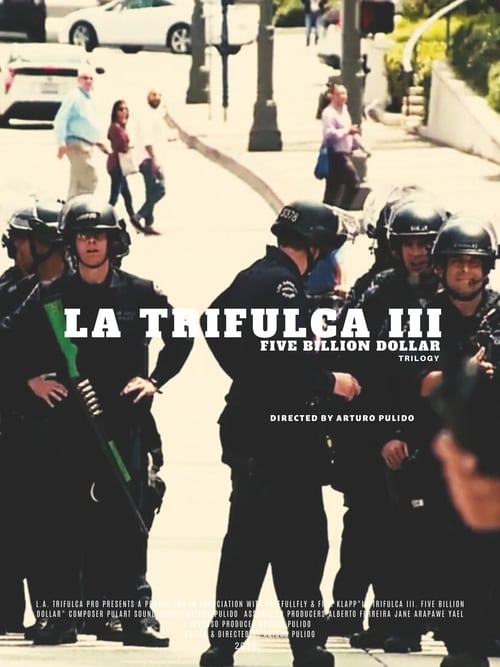
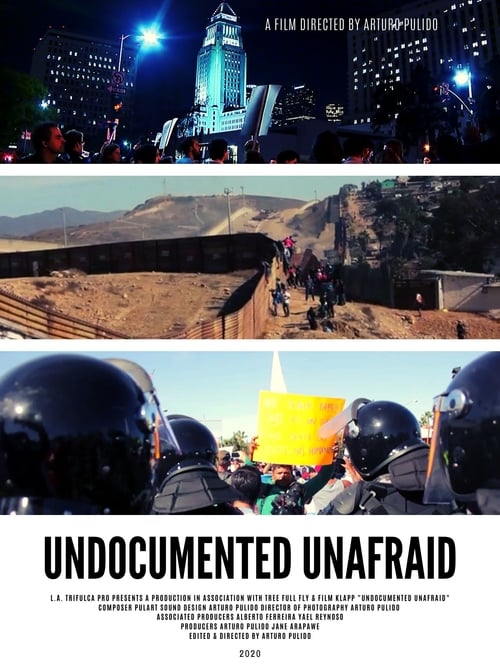
The citizens of Tijuana show their annoyance, what they call Central American invaders that ran out of their countries, fleeing violence, poverty, now installed and waiting to cross the wall to the United States.
A film about the Tibetan Freedom Concert in San Francisco in 1996.
"Gaza Is Our Home" is a profoundly personal documentary that peels back the layers of devastation within the Gaza Strip, as witnessed through the lens of filmmaker Monear Shaer. His debut documentary was created out of agony as a timely, impactful, and tragic response to the collective anguish of all who call Gaza home... What began as an auto-generated slideshow on Monear’s iPhone of his own trip to see his family in 2021, has since transformed into a feature-length documentary. Through a tapestry of intimate interviews, unfiltered personal footage, and raw storytelling, "Gaza Is Our Home" transcends the political rhetoric and confronts audiences with the agonizing reality and ongoing cruelty thrust upon the film-makers own family. It is more than just a documentary... Rather, "Gaza Is Our Home" stands as a testament to the humanity behind the over 33,362 innocent lives massacred since Oct 2023...
The documentary begins when the fictionalized drama ends. Sara spent three years volunteering to save refugees on the same journey that made her so famous, and was suddenly arrested in Aug. 2018, accused by Greek authorities of running a criminal enterprise with charges including “international espionage and people smuggling.” If convicted, she faces up to 25 years in prison and the end of her humanitarian career. Shot over three years, the film follows Sara’s fight for justice and journey of self-discovery.
Marcela, Anabella and Estrella are three trans women who have defied the lifespan expected for a trans person. Through their recollections, one explores the memory’s strength, resistance and love for life of these three women.
Journalist Dermi Azevedo has never stopped fighting for human rights and now, three decades after the end of the military dictatorship in Brazil, he's witnessing the return of those same practices.
Documentary about the Lyon sex workers who occupied the church of St. Nizier on June 3, 1975.
What is possible when we have guaranteed money to meet our basic needs? No requirements. No stipulations. No paybacks. We look to the village of Busibi to discover what’s possible when we give money directly to people. No strings attached. The answer lies in the residents’ personal stories. Their successes and tribulations illustrate the impact of one of the most daring projects in contemporary development cooperation. Their life stories unexpectedly prove to be all too familiar. They make us laugh. They move us. Blending in together, they create a colorful and poetic reality portrait, illustrating the big consequences of a small sum of money …
September 1st, 1939. Nazi Germany invades Poland. The campaign is fast, cruel and ruthless. In these circumstances, how is it that ordinary German soldiers suddenly became vicious killers, terrorizing the local population? Did everyone turn into something worse than wild animals? The true story of the first World War II offensive that marks in the history of infamy the beginning of a carnage and a historical tragedy.
An unlikely collaboration between a forensic scientist from Texas and a group of Latin American students changes the course of forensic science and international human rights.
Oxana is a woman, a fighter, an artist. As a teenager, her passion for iconography almost inspires her to join a convent, but in the end she decides to devote her talents to the Femen movement. With Anna, Inna and Sasha, she founds the famous feminist group which protests against the regime and which will see her leave her homeland, Ukraine, and travel all over Europe. Driven by a creative zeal and a desire to change the world, Oxana allows us a glimpse into her world and her personality, which is as unassuming, mesmerising and vibrant as her passionate artworks.
An exodus of migrants settled in Tijuana and they hope to cross each day regardless of the consequences, the children tell us what they see, want and what they are willing to pay.
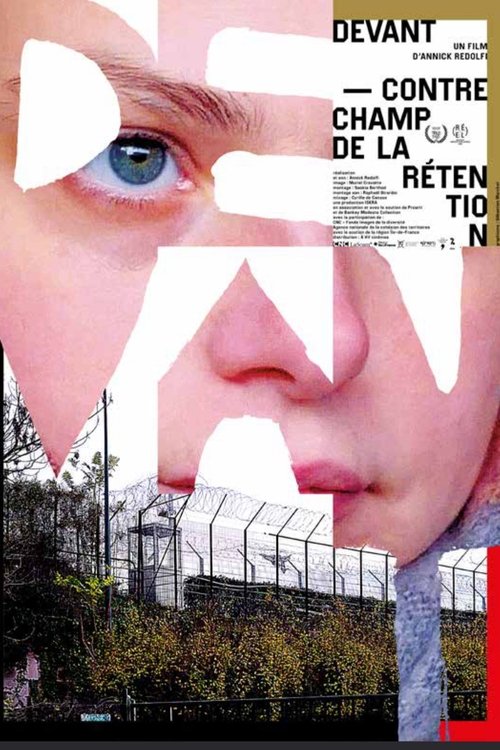
Artin, a young Iranian bodybuilder, and Jahan, a Kurdish man who recently discovered his love for painting, live in Kærshovedgård, a former prison now used as a deportation center.
A girl from St. Petersburg walks around protest-ridden Moscow, talking to riot police and believing that sooner or later they will go over to the side of the demonstrators. An 18-year-old student of a St. Petersburg college introduces herself as Alice and tells about herself that from the age of four she lived in an orphanage and in foster families. In Moscow, Alisa, for whom this is the first rally in her life, walks along the police cordons and looks under the OMON helmet. "Under the mask you can't see, are you even human?"
The 6 Guarani villages of Jaraguá, in São Paulo, fight for land rights, for human rights and for the preservation of nature. They suffer from the proximity to the city, which brings lack of resources, pollution of rivers and springs, racism, police violence, fires, lack of infrastructure and sanitation, among others. Unable to live like their ancestors, their millenary culture is lost as it merges with the urban culture.
For more than forty years, Belela Herrera has dedicated her life to saving that of others. The politically persecuted, those displaced by civil wars, and the world's refugees are her concern and vocation. Her story is also that of a woman who defined herself and twisted the destiny reserved for girls of her social class: marrying to a man from high society, having a large family and a comfortable and elegant existence . And it is also the story of a female legacy that is part and consequence of the invisible resistance of thousands of women.
Fragmentary perspectives on Human Rights and transgender (trans*) People in Turkey. What remains at the place where a murder happened? What constitutes trans* life? How to cope with daily violence and hatred? We begin to search for traces. We follow the tracks of resistance and survival. We are collectors of the expelled. We gather fragments of trans* lives inspired by texts of Nazim Hikmet, Foucault, Benjamin and Zeki Müren. Trans*BUT is a documental research study driven by the question: “What keeps you going when all else falls away?”
On a winter night in 2002, a couple in their early 20s is breaking up atop a bridge, when the woman falls down. Is it a suicide or accidental death? The man asks a friend to call an ambulance, but the woman dies. The man and his friend are imprisoned for murder when an eyewitness reverses her original statement and says that she saw the two men throwing the woman from the bridge. After more than a decade, director Shih Yu-Lun collaborates with the ‘Taiwan Innocence Project’, a private organization that helps innocent people who have been unjustly convicted, to re-investigate the case.