This educational film is an introduction to the ergot fungus, including lifecycle, cultivation, medicinal uses, and toxic effects. The film also summarises methods for the chemical extraction of ergoline compounds.
Henry H. Dale
as Himself
In search of the lucrative matsutake mushroom, two former soldiers discover the means to gradually heal their wounds of war. Roger, a self-described 'fall-down drunk' and sniper in Vietnam, and Kouy, a Cambodian refugee who fought the Khmer Rouge, bonded in the bustling tent-city known as Mushroom Camp, which pops up each autumn in the Oregon woods. Their friendship became an adoptive family; according to a Cambodian custom, if you lose your family like Kouy, you must rebuilt it anew. Now, however, this new family could be lost. Roger's health is declining and trauma flashbacks rack his mind; Kouy gently aids his family before the snow falls and the hunting season ends, signaling his time to leave.
Dipendra Bhandari follows a family from Rolpa as they head up north to the Himalayan foothills in search of the yarsagumba, the fungus that grows out of caterpillars prized for its virile properties. They join the caravan of thousands of other Yarsa hunters on their yearly trek up the treacherous yet breathtaking mountain trails.
I AM is an utterly engaging and entertaining non-fiction film that poses two practical and provocative questions: what’s wrong with our world, and what can we do to make it better? The filmmaker behind the inquiry is Tom Shadyac, one of Hollywood’s leading comedy practitioners and the creative force behind such blockbusters as “Ace Ventura,” “Liar Liar,” “The Nutty Professor,” and “Bruce Almighty.” However, in I AM, Shadyac steps in front of the camera to recount what happened to him after a cycling accident left him incapacitated, possibly for good. Though he ultimately recovered, he emerged with a new sense of purpose, determined to share his own awakening to his prior life of excess and greed, and to investigate how he as an individual, and we as a race, could improve the way we live and walk in the world.
Jack Parsons: Jet Propelled Antichrist is a story about one of the fathers of modern rocketry and a founder of the Jet Propulsion Laboratory (JPL) which as part of NASA still leads the way in the development of rockets and the exploration of space. He was also an occultist, a sorcerer and a magus. The infamous magician Aleister Crowley the self-proclaimed Great Beast called him son. He called himself ‘The Antichrist’ and was repeatedly investigated by the FBI. At the age of 38 Parsons died in a mysterious explosion that made headlines around the US. Officially it was a tragic scientific accident — other interpretations of the event persist to this day.
This video provides step-by-step instructions for cultivating Psilocybe cubensis mushrooms at home. Viewers areintroduced to the mushroom lifecycle, sterilization techniques, inoculation methods, substrates, incubation, terrariums, humidification methods, casings, agar media, strain isolation, and bulk growing.
Documentary about births around the different cultures and regions of the world.
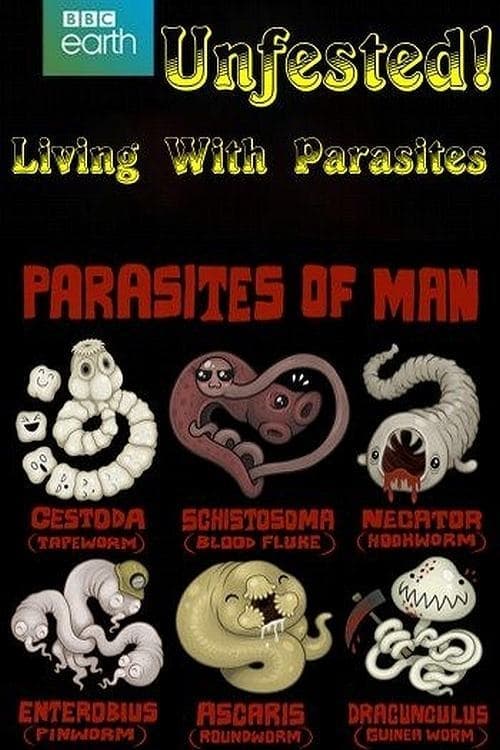
Dr Michael Mosley explores the bizarre and fascinating world of parasites by turning his body into a living laboratory and deliberately infesting himself with them.
Women make up less than a quarter of STEM professionals in the United States, and numbers are even lower for women of color. But there is a growing group of researchers who are writing a new chapter for women scientists, exposing longstanding discrimination, and leading the way in making science more inclusive.
Coming in all shapes and sizes, bacteria are present in every corner of the Earth. Their purposes and types are even more diverse, with only 1% being truly harmful. Dive into the world of Bacteria to experience the latest discoveries and scientific knowledge surrounding these plentiful and necessary microbes.
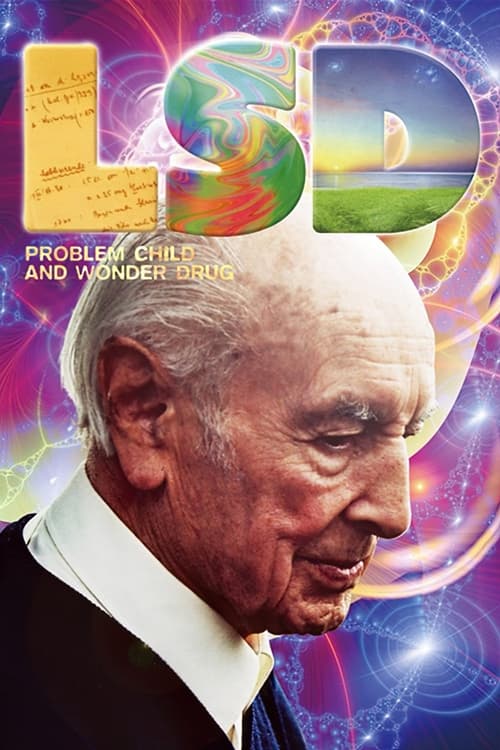
LSD: Problem Child and Wonder Drug captures the fascinating story of LSD as it is eloquently told by Dr. Albert Hofmann, the 100-year-old sage-scientist who brought LSD into the world. With interviews and presentations by Rick Doblin, Alex Grey, Ralph Metzner, Carl Ruck, Goa Gil, and others, this historic message from the father of LSD is a timeless relic and an immediate source of inspiration. The story is told through an account of the 2006 International LSD Symposium in Basel, Switzerland. At the now-legendary conference, eighty speakers and two thousand participants gathered for three days in honor of Dr. Hofmann's 100th birthday and to hear Dr. Hofmann speak about his life, his discovery, and his thoughts on the psychedelic experience. It was also an occasion for leading doctors, researchers, artists and thinkers in the psychedelic field to present their work.
Deep in Mexico’s mushroom-rich forests, two women from indigenous communities have become mycologists. This immersive sci-fi documentary follows their unusual, fungi-driven paths as they seek to reconcile the past and present while reimagining the future for themselves and the changing world they inhabit.
Preparation of "spawn" for commercial mushrooms, which grow to the tune of "You Came Along." Also: extraction & uses of snake venom; personal dress forms; a Frank Lloyd Wright building in Racine, Wisc.
Full step-by-step LSD Synthesis steps
That smelly, pale yellow liquid that people flush down the toilet every day is an industrial fertilizer, a diagnostic tool, a medicine, a renewable energy resource; it is an inexhaustible substance that is produced daily in huge quantities. This is the golden story of urine.
In the 1970s, Dr. Alexander “Sasha” Shulgin significantly contributed to the development and psychopharmaceutical use of MDMA: a catalyst to personal doors entombed or unknown. His widow, co-author, and research partner, Ann—alongside friends, family, and colleagues—gives a guided tour of their life and laboratory, reflecting on how risks and revelations opened a world of compound enlightenment. Stippled with spirituality, sadness, and skepticism, the Shulgins’ chemical love story examines the power of psychedelic psychotherapy, sacred alchemy, and challenging the path of misunderstood resistance.
Expert John Wass presents a documentary telling the story of how hormones were discovered and remain at medicine's cutting edge as we try to deal with modern scourges like obesity.