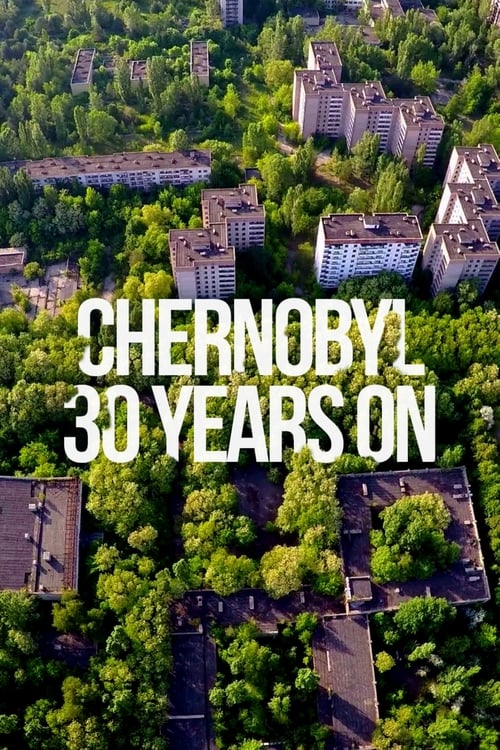
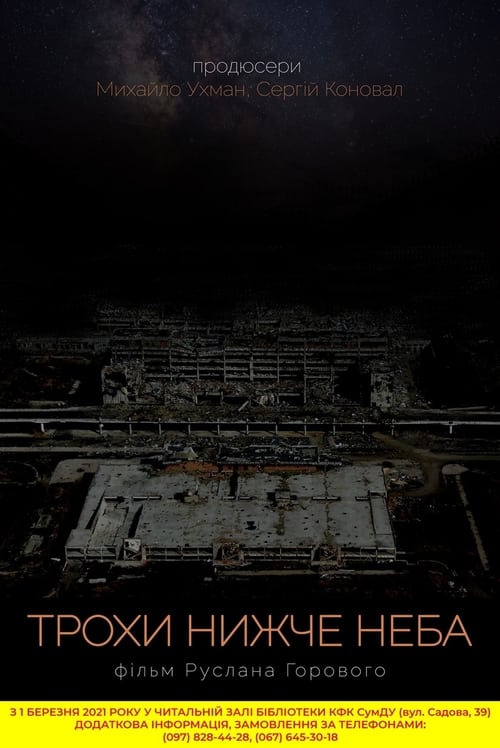
Poliske was contaminated with radioactive material after the 1986 Chornobyl disaster. Soviet authorities did everything they could to erase the ancient history of this town, and after Chornobyl, they destroyed its future.
A different history of the Cold War: how Estonians under Soviet tyranny began to feel the breeze of freedom when a group of anonymous dreamers successfully used improbable methods to capture the Finnish television signal, a window into Western popular culture, brave but harmless warriors who helped change the fate of an entire nation.
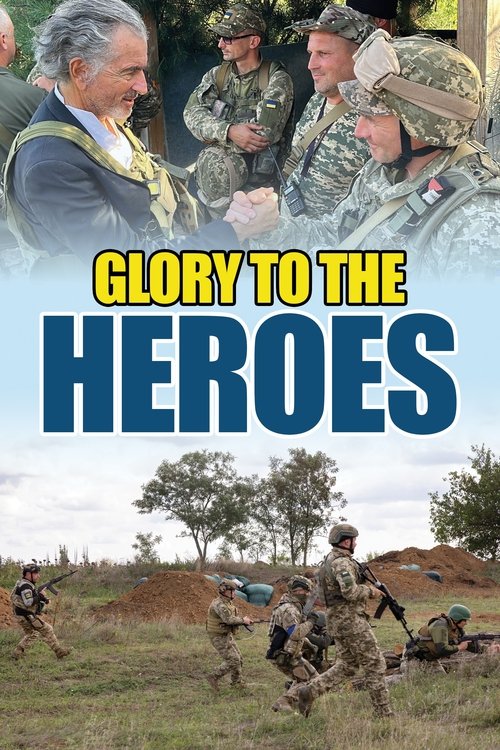
Between February and April 2025, filmmakers Bernard-Henri Lévy and Marc Roussel filmed the Pokrovsk and Soumy fronts in eastern Ukraine, following the fighters of the Anne de Kyiv Brigade, armed by France. They filmed the daily lives of the inhabitants, bombarded by Russian forces terrorizing civilians on the eve of possible negotiations. They interview President Zelenskyy, who is reluctant to travel to Washington, and then watch the rebroadcast of the meeting with Ukrainian soldiers in a bunker. For the real heroes are the anonymous fighters and civilians who hold their heads high in the face of adversity and suffering, and who are filmed on a daily basis. The final part of Lévy’s “Ukrainian Quartet”, Our War is a diary, peppered with flashbacks in which the author recalls the high points of this war that began in 2014.
The residents of Bucha, Ukraine, are rebuilding their city from the rubble after surviving the horrors of Russian occupation. A newly married couple, a schoolgirl, a city official, and an elderly housewife have all endured the painful experiences of war, yet they manage to hold onto hope and solidarity. But how do you rebuild in the wake of growing trauma, especially with war still raging in your country? As time hopes for a peaceful life fade, they must grapple with mounting tensions within their communities. Shot over a three-year period, the film is a follow-up to When Spring Came To Bucha, as five protagonists navigate the complex terrain of inner conflicts, trauma, and a longing for justice, posing questions about the future of a society at war.
In the aftermath of the 1986 Chernobyl atomic fallout time seems to stand still in Germany. Like disconnected ghosts, the teenager Phillip, his overbearing father Henning and the polish housekeeper Ada live together in a Wilhelminian-style villa. In this environment of toxic nature and masculinity, Phillip decides to go on a boat trip with Ada, triggering a symbolic stream of consciousness.
Takes us to locations all around the US and shows us the heavy toll that modern technology is having on humans and the earth. The visual tone poem contains neither dialogue nor a vocalized narration: its tone is set by the juxtaposition of images and the exceptional music by Philip Glass.
The story of the Londoners recruited to be freedom fighters during the South African apartheid during the 1960s.
A seventeen-year-old village school graduate, a guy nicknamed Kazan, dreams of becoming a famous rapper and winning the heart of Sveta. For the sake of his dream, he is willing to risk everything, but circumstances steer his life in a different direction.
A black and a white woman meets in Dar es Salam because of their men, and starts a friendship, despite their different background.
"Smoke Signals" follows the volunteers at High Point Lookout, one of the last remaining fire lookout towers in California. Alternating between the daily duties of the fire lookouts, and a series of profiles on wildfires that have traced their history, "Smoke Signals" questions the role of the fire lookouts in the face of rapidly advancing technology and climate change.
A nurse from Ukraine searches for a better life in the West, while an unemployed security guard from Austria heads East for the same reason. Both are looking for work, a new beginning, an existence, struggling to believe in themselves, to find a meaning in life...
A look at the state of the global environment including visionary and practical solutions for restoring the planet's ecosystems. Featuring ongoing dialogues of experts from all over the world, including former Soviet Prime Minister Mikhail Gorbachev, renowned scientist Stephen Hawking, former head of the CIA R. James Woolse
Two police officers struggle to survive when they become trapped beneath the rubble of the World Trade Center on September 11, 2001.
With searing insight that shines light in dark corners, EATING OUR WAY TO EXTINCTION is a compelling feature documentary that opens the lid on the elephant in the room no one wants to talk about. Confronting and entertaining, this documentary allows audiences to question their everyday choices, industry leaders and governments. Featuring a wealth of world-renowned contributors including Sir Richard Branson and Tony Robbins, it has a message of hope that will empower audiences.
This historical drama tells the story of Qin Shihuang, who unified China's vast territory and declared himself emperor in 221 B.C. During his reign, he introduced sweeping reforms, built a vast network of roads and connected the Great Wall of China. From the grandiose inner sanctum of Emperor Qin's royal palace, to fierce battles with feudal kings, this film re-creates the glory and the terror of the Qin Dynasty, including footage of Qin's life-sized terra cotta army, constructed 2,200 years ago for his tomb.
Mariupol. Pre-war life in a small Ukrainian town on the shore of the Azov Sea, with a good family life, quarrelsome neighbors, amateur opera, denunciations to the NKVD, and a dance floor in the city garden, the persecution of religion and, of course, with love.