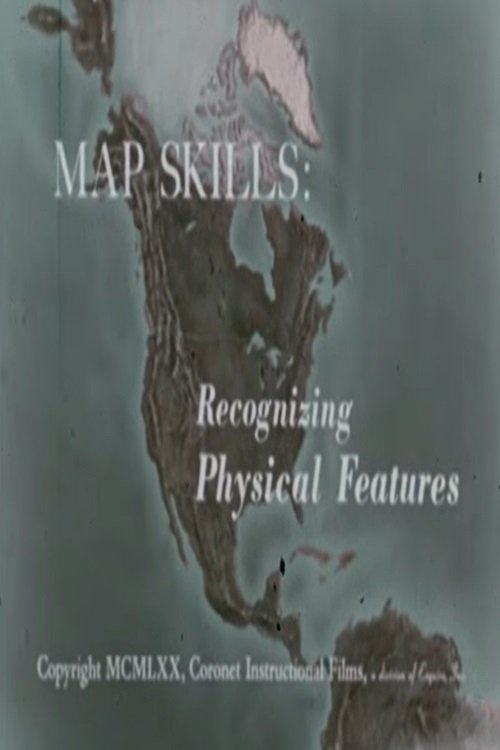
The Gold Rush, Phoenicia as a sea power, political change in Africa, and the Panama Canal are some of the topics considered in showing how different kinds of maps can be used to gain insights into events and patterns of history.
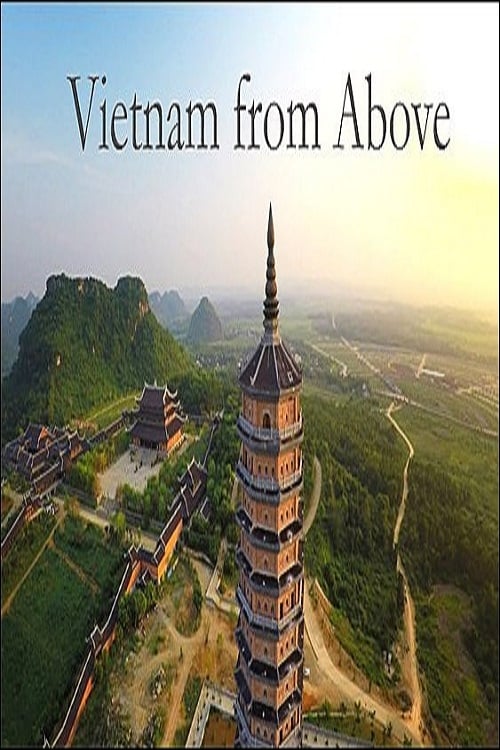
Travel across Vietnam on a breathtaking cultural and historical journey. Uncover ancient Chinese influences on Vietnamese traditions and striking examples of French Colonial architecture, and trace the impact of the Vietnam War in the north and south. Visit the country’s lively modern cities, taking in temples, floating markets, and the world heritage sites of Huế and Ha Long Bay.
Through animation, maps of the same scale and projection are combined to show relationships between natural features of the earth, human use, and social and political features. Projects different kinds of animated maps of the same scale and explains how the maps are used in gaining an understanding of the relationships between the social, political, and natural features of the earth.
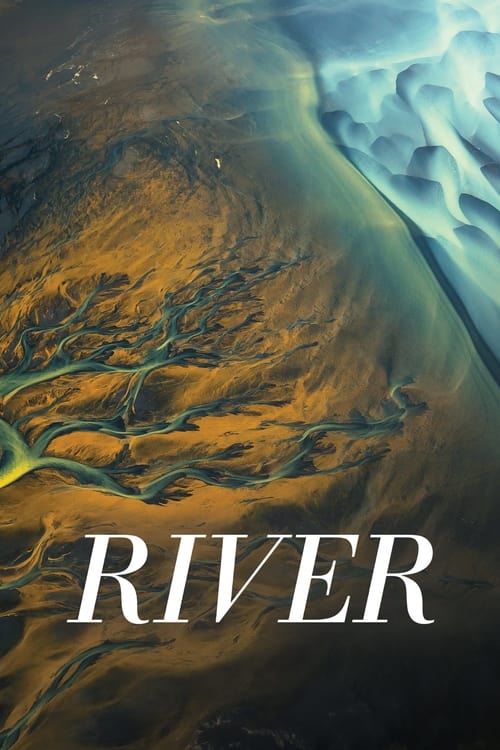
A cinematic and musical odyssey that explores the remarkable relationship between humans and rivers. Throughout history, rivers have shaped our landscapes and our journeys; flowed through our cultures and dreams. RIVER takes its audience on a journey through space and time; spanning six continents, and drawing on extraordinary contemporary cinematography, including satellite filming, the film shows rivers on scales and from perspectives never seen before. Its union of image, music and sparse, the poetic script will create a film that is both dream-like and powerful, honouring the wildness of rivers but also recognizes their vulnerability.
Uses animation, wave tank, live-action photography, and underwater models to show how waves develop, how coastlines are shaped, and to describe the forces that change the sea bottom.
Many geneticists and archaeologists have long surmised that human life began in Africa. Dr. Spencer Wells, one of a group of scientists studying the origin of human life, offers evidence and theories to support such a thesis in this PBS special. He claims that Africa was populated by only a few thousand people that some deserted their homeland in a conquest that has resulted in global domination.
Views of the earth from the ground, from a plane and from a space ship show major features of the land, the oceans and the atmosphere.
Physical features such as gulf, peninsula, island, etc, are defined and basic principles of using colors to show elevation are illustrated with models.
Explores the distinctive features of the major rivers of the continent, and discusses their contributions to the farming, recreation, transportation and hydroelectric power of North America.
Presents a geographic overview of the Rocky Mountain region. Discusses the significant role that this region of natural resources has played in the development of the continent
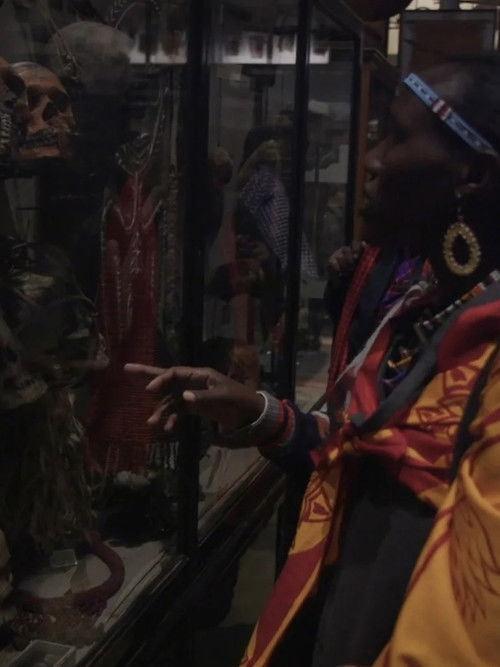
Decolonising the Curatorial Process is a forty-minute documentary which explores decolonial strategies in an academic and curatorial context. The film features academics, activists and practitioners, and contains case studies of institutions that are deploying critical, self-reflective forms of curatorial practice. The Museum of London Docklands exhibition on slavery and the sugar industry is examined as an example of how an institution can decolonise the curatorial process, utilise the work of artists in a museum context, and critically examine East London's imperial history. The Pitt Rivers museum in Oxford, who are working with Maasai activists from Kenya and Tanzania on a project centred on repatriating the museum's collection of sacred Maasai artefacts, also features in the film.