For twenty years, three filmmakers in resistance exchange a series of documentary and fictional telegrams from different parts of the world, in the midst of a war of colonization waged by the Western powers.
Samantha Coronel
as
Patricia loranca
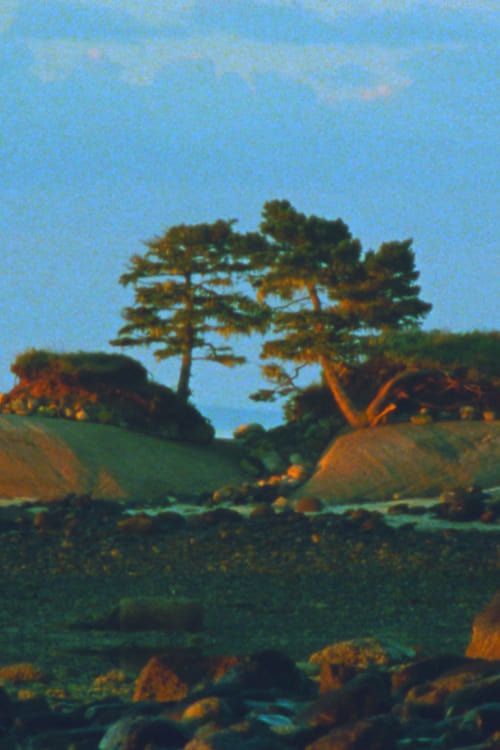
In a remote area of northern Spain, the wind has a name: Tramuntana. Tramuntana takes what it wants—clothes, trees, boats, and the people of the landscape who live with the endless threat of being carried away by its force. This film is a lyrical portrait of this furious wind, woven from the stories passed down by local villagers.
An experimental tribute to Jean-Luc Godard, his documentary works and his insights in our modern world.
To produce speech, a set of mechanisms must be brought together. What is the normal articulation for speech? How to produce the sounds that make it up in the correct way? A physiological analysis of the aspects of speech shows us how: the jaw must move in a certain way; the air must be expelled from the lungs in another. Based on the concepts stated in the film "Normal Speech Articulation" (1965), produced by the University of Iowa (USA), we intend to reflect on the way women have been represented, and consequently educated, over the years, both in film and in the media. Largely composed of archival footage, this film intends to make evident, through a montage inspired by Structuralist movements, the violence of this education.
An experience of a camera swinging in different gestures facing the optical distortion of the Sun. The last appearance of the smudge.
A film essay that intertwines the director's gaze with that of her late mother. Beyond exploring mourning and absence as exclusively painful experiences, the film pays tribute to her mother through memories embodied by places and objects that evidence the traces of her existence. The filmmaker asks herself: What does she owe her mother for who she is and how she films? To what extent does her film belong to her?
Outtakes, commentary from Zefier's third film: Jo; or The Act of Riding a Bike.
Two robots embark on a quest to become human.
A condensation of a handful of sunsets with various visual moods. Red and blue as opposites that still find a way to cohere. Concrete silhouettes over an ever-changing, expanding canvas. Every movement is collective, molecular. Over an invisible horizon, a chance presents itself to meditate on the “speed” of water (and the sea) and also for a more fluid kind of editing.
A seagull, a dog, a child, a call to prayer; Looking through a window, the corridor of a train, the wall of a medina; Everyday life is momentarily paused through the eyes of a stranger in an unknown land.
A Landscape documentary about the silent voids the living inhabit after everyone they love has gone.
Archive footage from 2006 - 2010 of a young girl growing up during the ages of four to eight. Only fragments of what is remembered exists. Words from a transgender man float to the surface as fleeting memories go on.
Mona is a 22 year old trans girl from a small village in France. She puts needles attached to peacock feathers in her skin, under bright lights, late at night. She bleeds, half naked, in front of small crowds of people. Sometimes they faint whilst watching her. Why would she do this? How did she learn to do it? And why would someone want to watch?
Born from steel and glass Kino Kopf is created by two inventors. They are assembled by their mother, a nurturing artist, and their Father a greedy entrepreneur. Kino Kopf is the first of its kind a sentient humanoid VHS camera. They are given a life by their mother but presented to the world by their father. Kino Kopf is the next big sensation and spurs a technological revolution. They are soon forgotten and alone as new models surpass them. Kino Kopf is left alone to contemplate if they ever had a soul, as visions of an electric cowboy dance through their dreams.
This is a story about a man who believes that he has two “selves” - external and internal. That is, an organism is a certain conglomerate of cells, each of which is a separate individual. This hybrid creature has a certain common personal “I” that uses the entire organism, and is the organism itself, which has its own will. According to the character, one can communicate with him, which is what he is trying to do. He wants to reach him and comes up with different ways of communication: injecting substances under the skin or intravenously, tattooing texts on the body, swallowing objects. The answer would come in the form of a rash or other physical manifestation that had to be interpreted. As a result, communication is carried out and the second “I” agrees to die.
A hen questions the meaning of her life on a farm.
This film was made out of the capture of a live animation performance presented in Rome in January 2005 by Pierre Hébert and the musician Bob Ostertag. It is based on live action shooting done that same afternoon on the Campo dei Fiori where the philosopher Giordano Bruno was burned by the Inquisition in 1600. A commemorative statue was erected in the 19th century, that somberly dominate the market held everyday on the piazza. The film is about the resurgence of the past in this place where normal daily activities go on imperturbably. The capture of the performance was reworked, shortened and complemented with more studio performances.
This short film is part of Karpo Aćimović Godina's experimental and documentary work in 1970s Yugoslav cinema. It extends his interest in regional identities, minorities, and the visual traces left by different cultures on Yugoslav territory. The film offers a journey through examples of architecture, decor, and objects related to Islamic tradition in the former Yugoslavia, such as mosques, ornamental elements, and calligraphy. It explores how this art is embedded in the region's history and in the daily lives of the communities that produced it. It is an observational film, without a dramatic plot, functioning primarily as a "visual essay" on the material culture of Islam in a Balkan context. The tone is analytical and contemplative, closer to a cultural study or a poetic inventory.