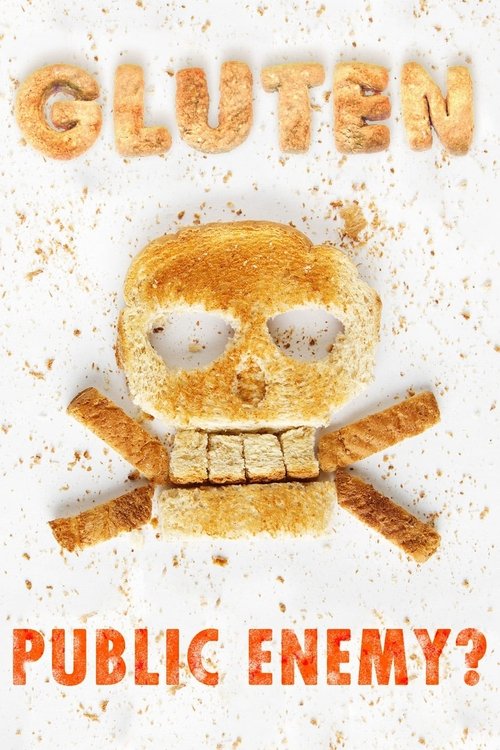
When the US government ignored repeated warnings by its own scientists and allowed untested genetically modified (GM) crops into our environment and food supply, it was a gamble of unprecedented proportions.
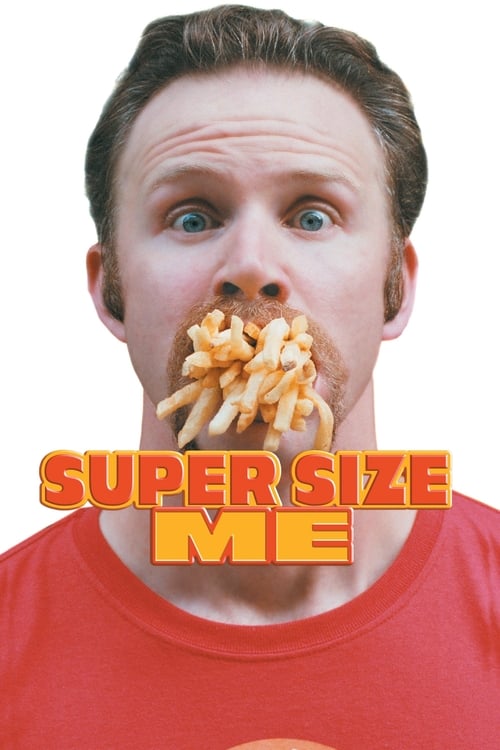
Morgan Spurlock subjects himself to a diet based only on McDonald's fast food three times a day for thirty days without exercising to try to prove why so many Americans are fat or obese. He submits himself to a complete check-up by three doctors, comparing his weight along the way, resulting in a scary conclusion.
Two rivals address the years of animosity that defined their careers and their shared dream of achieving greatness on the world’s biggest stage: the Nathan’s Hot Dog Eating Contest.
Two countries, two restaurants, one vision. At Gabriela Cámara's acclaimed Contramar in Mexico City, the welcoming, uniformed waiters are as beloved by diners as the menu featuring fresh, local seafood caught within 24 hours. The entire staff sees themselves as part of an extended family. Meanwhile at Cala in San Francisco, Cámara hires staff from different backgrounds and cultures, including ex-felons and ex-addicts, who view the work as an important opportunity to grow as individuals. A Tale of Two Kitchens explores the ways in which a restaurant can serve as a place of both dignity and community.
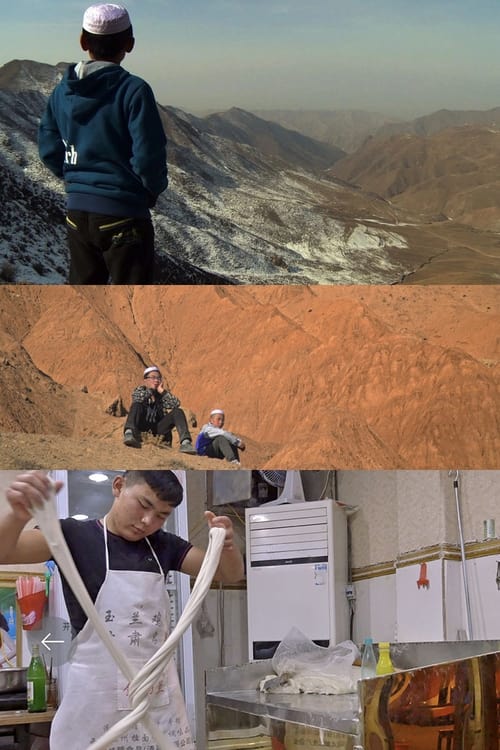
Ayi comes from a rural area of Eastern China and doesn’t have the residential permit that would allow her to work in Shanghai. Yet, she has been cooking in the streets for twenty years, in an old neighbourhood soon to be demolished. The film unveils the chaos of an ultra-modern city aiming to wipe out so-called substandard practices and to deport an unwanted population.
This explores the reality of chefs and cooks as they struggle to create dishes and experiences enjoyed on a daily basis. The restaurant industry is a tough business, not just for profits, but for everyone involved.
The meals based on indigenous ingredients and sustainability at the forefront. Project managers are soon faced with problems ranging from sourcing ingredients to staffing a high-end restaurant in a location inhabited by only 53 people.
As society tackles the problem of feeding our expanding population safely and sustainably, a schism has arisen between scientists and consumers, motivated by fear and distrust. Food Evolution, narrated by Neil deGrasse Tyson, explores the polarized debate surrounding GMOs. Looking at the real-world application of food science in the past and present, the film argues for sound science and open-mindedness in a culture that increasingly shows resistance to both.
From New York City to the farmlands of the Midwest, there are 50,000 Chinese restaurants in the U.S., yet one dish in particular has conquered the American culinary landscape with a force befitting its military moniker—“General Tso’s Chicken.” But who was General Tso and how did this dish become so ubiquitous? Ian Cheney’s delightfully insightful documentary charts the history of Chinese Americans through the surprising origins of this sticky, sweet, just-spicy-enough dish that we’ve adopted as our own.
This documentary about Rene Redzepi's Copenhagen restaurant follows the proceedings in the kitchen for six months as Noma climbs to the top of the world's 50 best restaurants.
After years of overproduction, the Reagan administration unloads over 500 million pounds of surplus cheese on the American public in the 1980s. The pungent dairy product comes to be known as 'Government Cheese.'
A documentary that exposes the shocking truths behind industrial food production and food wastage, focusing on fishing, livestock and crop farming. A must-see for anyone interested in the true cost of the food on their plate.
“Food Relovution: What We Eat Can Make A Difference” is an eye-opening and compelling feature documentary that examines the consequences of the meat culture as concerns grow about health, world hunger, animal welfare and the environmental cost of livestock production. It aims to show how these global issues affect everyone and are interrelated, and how making our food choices with a sense of awareness, knowing what we are buying and what we are eating is the first fundamental step towards a better world.
Savour the top gastronomic delights that every diner should sample in their lifetime, as voted for by members of the public. It's a mouth-watering journey through childhood favourites, exotic dishes and bizarre but delicious fare.
He's hungry, and chances are you're also hungry, so tag along. Who knows, you might learn a thing or two.
An organic farmer in Maine sets out to transform the prison food system. Seeds of Change captures the intersecting stories of life-long farmer Mark McBrine and several incarcerated men as they harvest their own meals from a five-acre prison garden unlike any other.
A surrealist home movie, filmed by Luis Buñuel in Cadaqués in 1930, focusing on Salvador Dalí's father and his wife.
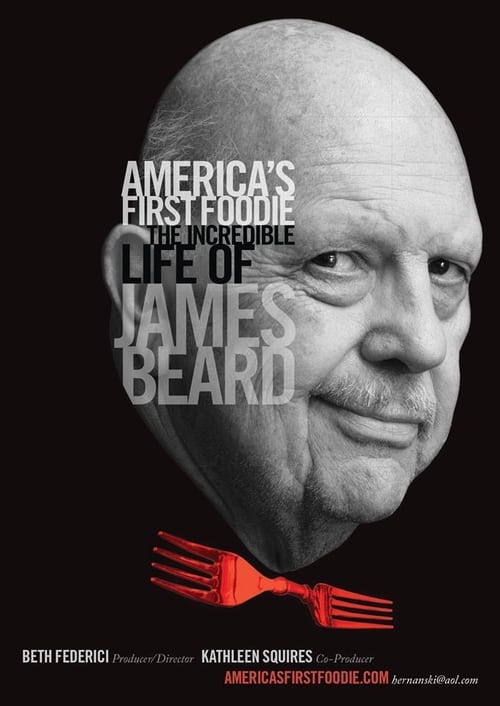
Food in the 21st century has become much more than “meat and potatoes” and canned soup casseroles.” Chefs have gained celebrity status; recipes and exotic ingredients, once impossible to find, are now just a mouse click away; and the country's major cities are better known for their gastronomy than their art galleries. This food movement can be traced back to one man: James Beard. His name graces the highest culinary honor in the American food world today—the James Beard Foundation Awards. And while chefs all around the country aspire to win a James Beard Award, often referred to as the “culinary Oscars,” many of those same chefs know very little about the man behind the medal. Respected restaurateur Drew Nieporent summed it up when he said, “Everybody knows the name James Beard. They may not know who he is, but they know the name.”
Crazy Legs Conti is an eccentric New York window washer, nude model and sperm donor, and huge fan of the annual July 4th hot dog eating competition. When he casually breaks the world oyster eating record in New Orleans, he decides to dedicate himself to fulfilling his lifelong dream of becoming a professional competitive eater.