Not unlike the travel blogs so in vogue today, this film takes us from Ereaga beach to Cape Matxitxako, treating us to an incomparable look at the beaches and towns on the way.

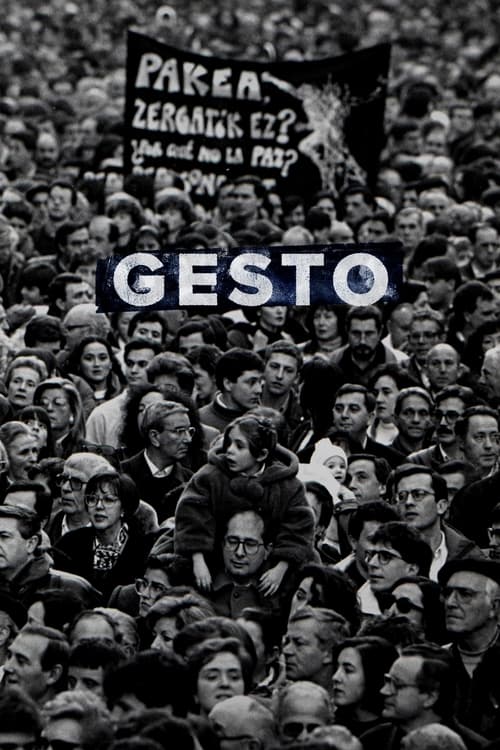
An attempt to create a bridge between the different political positions that coexist, sometimes violently, in the Basque Country, in northern Spain.
The chronicle of the process, ten long years, that led to the end of ETA (Euskadi Ta Askatasuna), a Basque terrorist gang that perpetrated robberies, kidnappings and murders in Spain and the French Basque Country for more than fifty years. Almost 1,000 people died, but others are still alive to tell the story of how the nightmare finally ended.
An in-depth interview with José Antonio Urrutikoetxea, known as Josu Ternera, one of the most relevant leaders of the terrorist gang ETA.
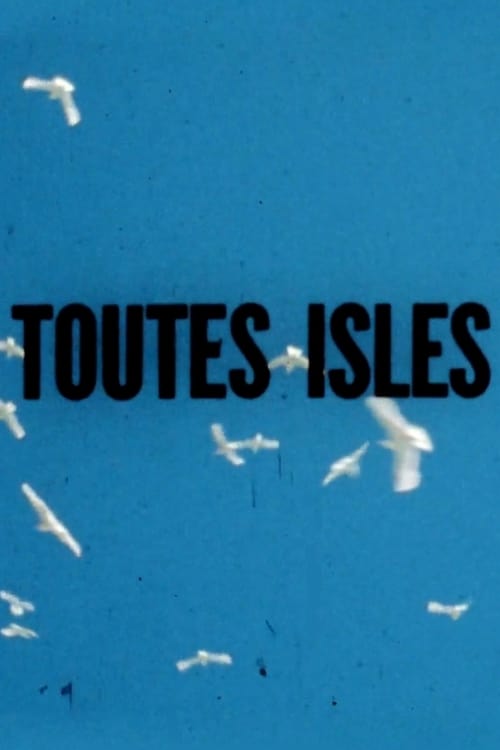
Did Cartier dream of making a country from this land of a million birds? In his records of his exploration he certainly marvelled at seeing the great auks that have since disappeared from Isle aux Ouaiseaulx, the razor-bills and gannets that are gone from Blanc-Sablon, and the kittiwakes from Anticosti, all the winged creatures of all the islands which he described as being "as full of birds as a meadow is of grass". And that's not even counting the countless snow geese.
'Ama Lur' is a documentary, directed by Nestor Basterretxea and Fernando Larruquert, that premiered in San Sebastián in 1968, and it is considered the foundation of Basque cinema.
There are landscapes that hardly anyone has entered or seen: this film takes the viewer through New Zealand from the southern edge to the northernmost tip. High-quality images from the air, on land and in the water bring paradise to the other end of the world.
At just 17 years old, Eduardo Madina and Borja Semper decided to enter politics to defend freedom of thought in the Basque Country. This made them a target of the ETA terrorist group for almost two decades.
Departing from peripheral details of some paintings of the Bilbao Fine Arts Museum, a female narrator unravels several stories related to the economic, social and psychological conditions of past and current artists.
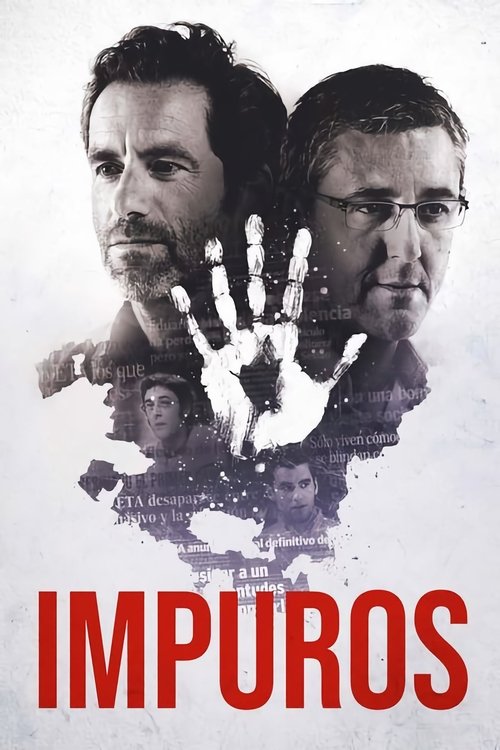
Basque Country, Spain. No one seems to know them. Some glances avoid theirs. Their social circle becomes smaller and smaller. They live under escort, watched by those who protect them and by those who threaten them: it is the experience of living in the shadow of ETA, a savage terrorist gang of unscrupulous criminals… of merely existing under the yoke of those who tomorrow could be their executioners.
Part of a series in which foreign filmmakers portray a region or town in France. Otar Iosselani looks at the Basque region and its inhabitants.
Large numbers of children and adults can be seen enjoying themselves, splashing about in the water or diving from the high-boards.
The massacre occurred 500 years ago. In 1525, the Spanish Royal Council ordered the execution of five members of a cult recently discovered in the Pyrenees. This event marked the beginning of a relentless, century-long prosecution against Basque witchcraft, which exhibited all the hallmarks of the great European witch hunts, including an unstable border between powerful nations, revolts against the lords, raging misogyny, confessions obtained under torture, and mass accusations. These past five centuries, only one account has been heard: that of the inquisitors and jurists, the same ones who invented the myth of flying witches who met with the devil at sabbats to plot their crimes.
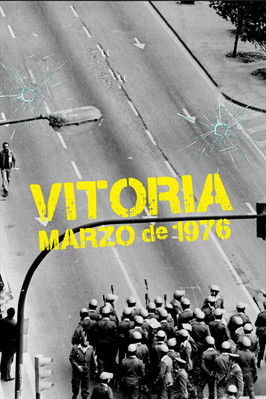
A reflection on the assassinations of social democrat politician Fernando Buesa Blanco and his bodyguard Jorge Díez Elorza, perpetrated by the terrorist gang ETA in Vitoria-Gasteiz, Basque Country, Spain, on February 22, 2000.
The personal stories lived by the Uncle, the Father and the Son, respectively, form a tragic experience that is drawn along a line in time. This line is comparable to a crease in the pages of the family album, but also to a crack in the walls of the paternal house. It resembles the open wound created when drilling into a mountain, but also a scar in the collective imaginary of a society, where the idea of salvation finds its tragic destiny in the political struggle. What is at the end of that line? Will old war songs be enough to circumvent that destiny?
The film follows five people from different origins as they move anonymously around the streets of Berlin. Each of them with another life somewhere else, trying to ascertain where to go.
Donostia-San Sebastián, Basque Country, Spain, 2011. Maider, a filmmaker, moves to the very same flat where pedadogist Elbira Zipitria Irastorza (1906-1982) clandestinely established the first ikastola, a Basque school, under the harsh regime of dictator Francisco Franco. Despite of her pioneering work, developed throughout thirty years, her story is not well known, so Maider, intrigued, begins to research…
The six-decade transformation of a block of houses, shown by means of artfully featured archival shots, highlights the beauty and sadness of human-made decay. In the blink of an eye 66 years pass by and a savings bank replaces a church.
Spain, 1997. The story of twelve days in July during which Basque society left indifference and fear behind and faced the threat of the terrorist group ETA.
Bournemouth offers a variety of sports, pastimes, steamer trips, and fine dining for holidaymakers, competing with cheaper foreign holidays and offering a variety of transportation options.
Cameras follow Irish solo sailor Tom Dolan as he attempts to sail single-handed around the island of Ireland, which is one of the toughest feats in sailing.